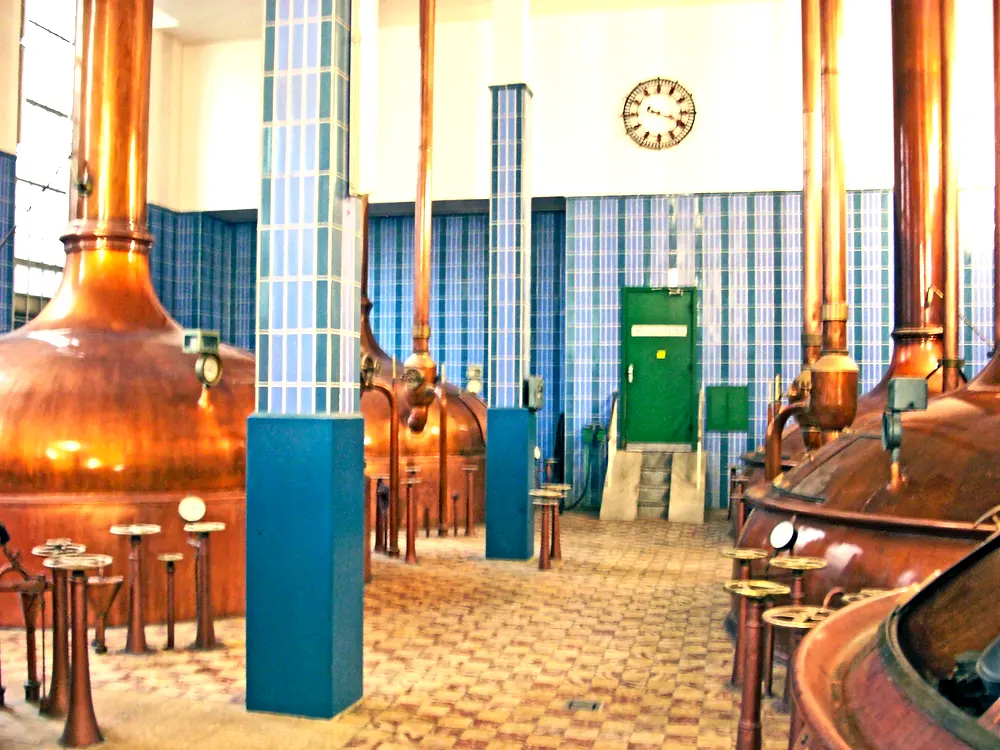
On 23 April 1516 two Bavarian dukes made a law in Ingolstadt: beer may be brewed only from water, barley and hops. That is the Reinheitsgebot, the purity law, the oldest food law in the world still in force today. Yeast was not in the law, because it was not yet known. Today four ingredients are allowed: water, malt, hops and yeast.
How is beer brewed? First the barley is put in water, then dried. That turns barley into malt. The malt is ground and boiled with hot water. Then hops are added; they make the beer bitter. At the end yeast is added, and the beer must rest for some weeks. After that it is filled into barrels and bottles.
In Germany there are about 1,500 breweries and over 7,000 different beers. Most breweries are in Bavaria. Germans like Pils best. But they drink less and less: about 90 litres per person a year. Thirty years ago it was 140.
The best-known festival is the Oktoberfest in Munich. It began in 1810 as a wedding celebration: Prince Ludwig married Princess Therese, and the whole city was invited. Today about six million visitors come every year. They drink around seven million litres of beer, from glasses holding one litre. The glass is called a Maß, and a Maß costs over fifteen euros today.