Feature: Ich werde zu Hause bleiben
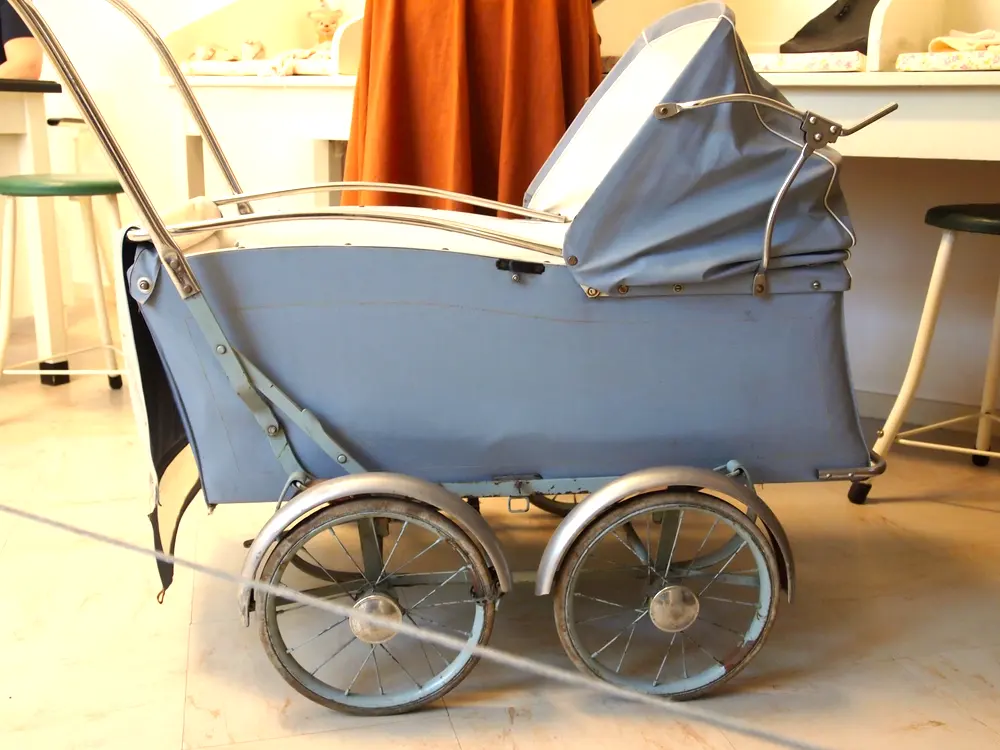
Press play and listen as many times as you like — the transcript appears once you check your answers.
B1.1 · 17 of 41
Lesson · 2 rules · you practise after the first one
Ein Radiofeature von etwa drei Minuten über ein Recht, das Zugewanderte oft erstaunt: die Elternzeit. In Deutschland dürfen Mütter und Väter nach der Geburt bis zu drei Jahre zu Hause bleiben, der Arbeitsplatz bleibt ihnen sicher, und der Staat zahlt bis zu vierzehn Monate Elterngeld. Eine Reporterin begleitet einen Vater, der demnächst sieben Monate zu Hause bleiben wird, und ein Sprecher erklärt die Regeln und die Zahlen: wie viel Geld es gibt, warum es zwei Partnermonate gibt und warum Väter im Durchschnitt trotzdem nur drei Monate nehmen. Der Vater ist erfunden; die Regeln und Zahlen sind real. Sprachlich hörst du, was du zuletzt geübt hast: das Futur I (Ich werde zu Hause bleiben. Meine Frau wird wieder arbeiten. Das wird sich ändern) und Adjektive und Partizipien als Nomen (die Angestellten, der Vorgesetzte, die Berufstätigen, die Alleinerziehende, das Wichtigste). Die Fragen prüfen Zahlen, Regeln und Formen.
Press play and listen as many times as you like — the transcript appears once you check your answers.
Reporter: Jonas Weber is 34, an engineer at a car-parts supplier in Ingolstadt and a father for eight weeks. In May his life will change once more. Jonas: From May I will stay at home for seven months. My wife will then work full time again, she is a doctor. She did the first months, now it is my turn. My supervisor swallowed briefly, but he could not say anything. It is my right. Narrator: The right is called Elternzeit, parental leave, and it applies to all employees in Germany. Until the child's third birthday mother and father may stay at home, together or one after the other. The employer must re-employ them afterwards, in a comparable position, and during parental leave he may not dismiss them. There is no money from the employer during this time. Instead the state pays the parental allowance: about 65 per cent of the last net income, at least 300, at most 1,800 euros a month, for twelve months. If both parents take parental leave, there are two extra months, the so-called partner months: fourteen months together. Single parents get the fourteen months alone. Reporter: The state introduced the two partner months in 2007, with a clear intention: fathers should stay at home. Did it work? Narrator: Partly. Before 2007 only every thirtieth father took parental leave. Today it is almost every second. But most fathers take exactly the two partner months and not a day more, often in summer and together with the mother. On average fathers stay at home three months, mothers almost twelve. The most important thing from the researchers' point of view: the fathers' months change families permanently; fathers who were at home longer still do more in the household years later. Reporter: Jonas, why seven months and not two? Jonas: Because two months are a holiday and seven months are everyday life. I want to know what it is like when you are alone with the child at three in the morning and still have to shop in the morning. My wife did that. I will do it too. And honestly: the parental allowance is less than my salary, but we manage. Reporter: What do the colleagues say? Jonas: The older ones look oddly. One colleague said in his day that would not have existed, and he sounded almost envious. The younger ones ask how I applied. Two want to do it next year too. That will change, I am sure, only more slowly than politics thinks. Narrator: The application is simple: seven weeks before the start, in writing to the employer, the parental allowance at the parental allowance office. The hardest thing, the working people say, is not the application. It is the sentence to the supervisor.
Photo: Baykedevries, CC BY-SA 4.0, Wikimedia Commons
Exercise
Hören: Ich werde zu Hause bleiben · B1.1
No single question is on screen — the report is about the whole exercise.
Reports go to the forum, where anyone can read them and the answer is kept for the next learner. To send one — and to be told when it is answered — sign in first. It takes one email, and no password.
Signing in lets us reply to your report, and shows you the answer the next time you are here. We email you a one-time link: no password, and nothing is shared with anyone.
Everything works without an account. Signing in backs your progress up, carries it to your phone, and lets you post on the forum.
One email, no password. We email you a one-time link: no password, and nothing is shared with anyone.