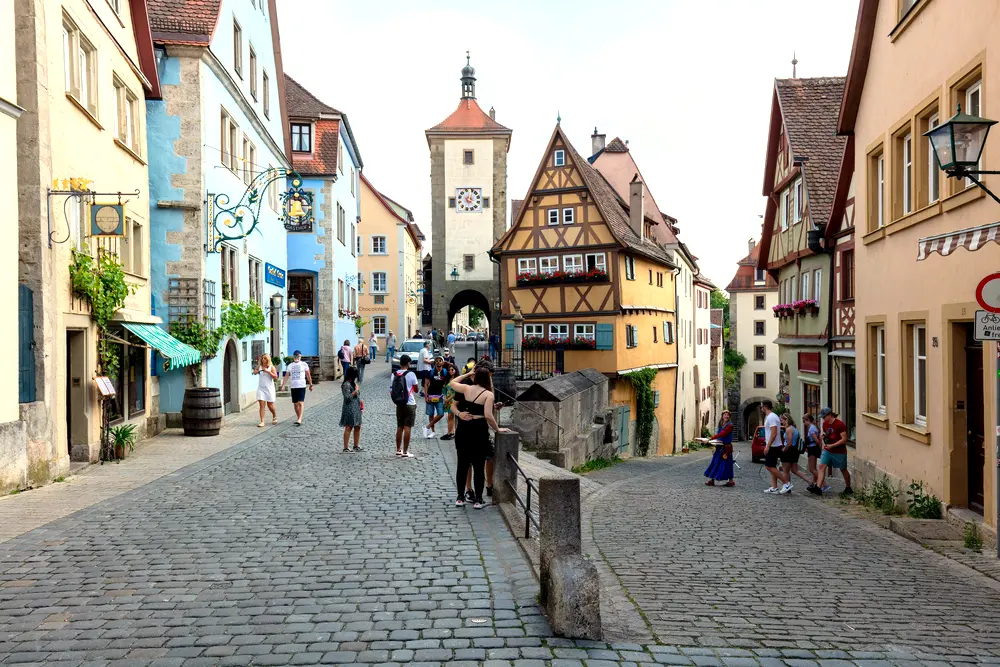
In October 1631 the imperial army stood before the walls of Rothenburg ob der Tauber. The Thirty Years' War had already lasted thirteen years, and the small free imperial town had sided with the Protestants. Their general was called Tilly, and he was known for not sparing towns that resisted. Only in May he had taken Magdeburg; the town burned, and twenty thousand people died.
Rothenburg resisted for three days. Then the ammunition was spent, the walls were breached, and on 30 October Tilly entered the town. He had the councillors arrested and announced that the town would be plundered and the councillors executed. The citizens begged for mercy. Tilly stayed hard.
Then, so the legend tells, the cellar master's daughter handed him the town's great welcome goblet, which held three and a quarter litres of Franconian wine. Tilly took a sip, the wine pleased him, and his mood improved. He said: 'If one of you empties this goblet in a single draught, I will spare the town.' It was a joke, for nobody could do that. But then former mayor Georg Nusch stepped forward, a man over sixty. He took the goblet, raised it and drank without pausing until it was empty. Then he stood a moment longer, bowed and fell over. Tilly kept his word. Nusch slept three days and three nights and lived another seventeen years.
What is true of it? That Tilly took the town and did not destroy it is in the records. That Nusch was former mayor and later owned the goblet, likewise. But nobody wrote of a drink at the time; the story only surfaced in the 18th century, and historians believe the town simply bought its freedom, with money, not wine. The people of Rothenburg are not bothered. In 1881 a master glazier wrote a play from the legend, and since then the citizens have performed it every year at Whitsun in the town hall, in period costume, with a real goblet and, so it is said, real wine. The clock on the market square shows the drink several times a day: a window opens, Nusch raises the goblet, and the tourists applaud, three hundred and ninety years later.