A1.2 · 44 of 44
Suchbild: Der Supermarkt
Lesson · 3 rules · you practise after the first one Book · ch. 1
A small corner shop full of groceries: find each item in the picture, then give it its article.
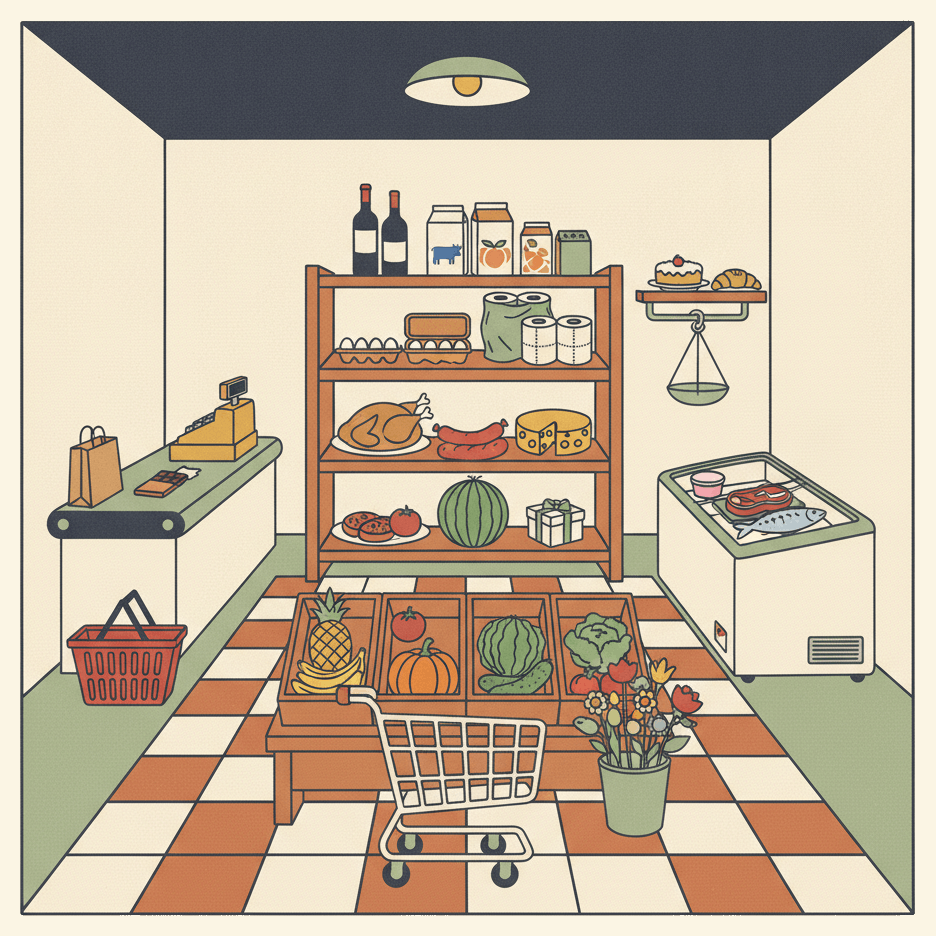
- 1Compounds in the corner shop: the last part decides
- 2Words in -e are usually die — but der Käse
- 3-chen is always das
Why this matters
A picture hunt instead of a deck: one small corner shop with 32 things to find in it, all words you need when you go shopping — der Einkaufswagen, die Kasse, das Kassenband, the cheese on the shelf and the fish in the freezer. The prompt asks Wo ist …? and you tap the object in the picture. A tap on bare wall or floor costs nothing; a tap on the wrong object tells you what you hit and you keep looking, and after three misses the right one is shown. Each find shows its label, coloured by its gender (blue der, red die, green das), then leaves a small tick in that colour, so you can see what you have already found. Once you have passed a run, the hunt turns harder: the prompt hides the article (Wo ist ___ Kasse?), and after the find you choose der, die or das yourself. No object is asked twice in the same run.
Report a problem
Exercise
Suchbild: Der Supermarkt · A1.2
No single question is on screen — the report is about the whole exercise.
Reports go to the forum, where anyone can read them and the answer is kept for the next learner. To send one — and to be told when it is answered — sign in first. It takes one email, and no password.
Signing in lets us reply to your report, and shows you the answer the next time you are here. We email you a one-time link: no password, and nothing is shared with anyone.