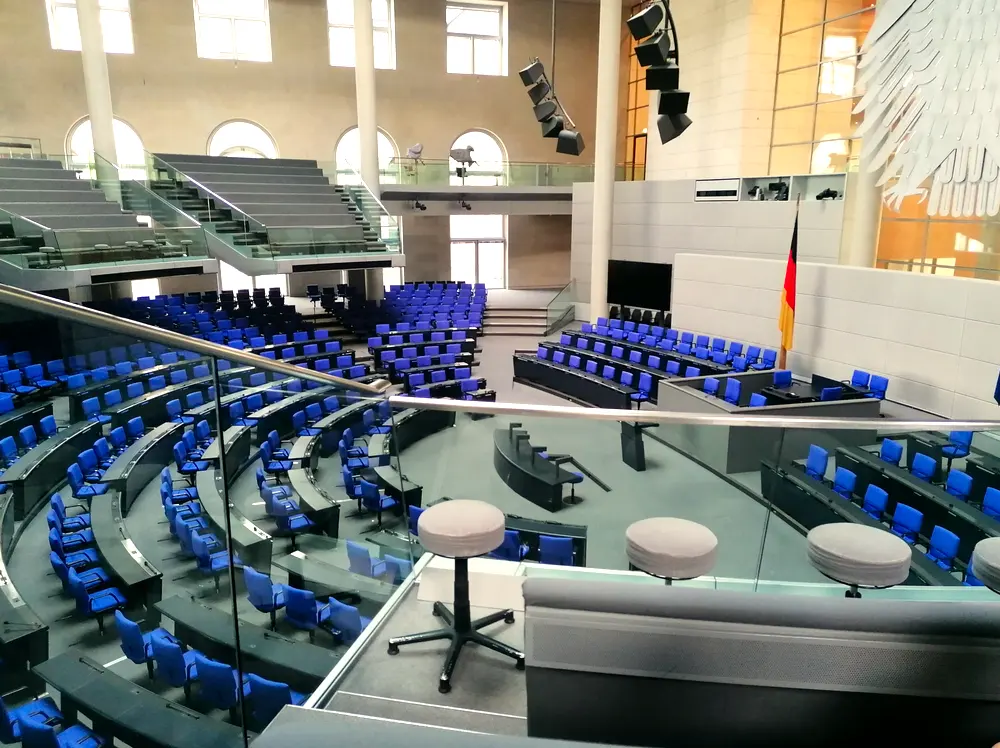
In autumn 2023, 160 people who had never seen one another before met in Berlin: young people in training as well as pensioners, people from big cities as well as from villages. None of them had been elected to an office, none had applied. They had been drawn by lot. For the first time in its history the Bundestag had set up a citizens' assembly, and its task was: what should the state do about food and nutrition, and what not?
The procedure is more elaborate than the word lottery suggests. First, around 20,000 letters were sent to randomly selected residents in randomly selected municipalities. More than 2,000 people replied that they would take part. From them the 160 were drawn in such a way that the group mirrors the population in miniature: by age, sex, federal state, size of home town and level of education. Because the subject was food, care was even taken that the proportion of vegetarians was right.
Over several months the group listened to experts, discussed in small rounds and finally voted. In January 2024 nine recommendations were handed to parliament. In first place was a free lunch for all children in nurseries and schools. In addition, supermarkets were to be obliged to pass on food that is still edible instead of throwing it away, and an age limit was demanded for energy drinks.
The idea is old. In ancient Athens most offices were filled by lot because people distrusted elections: the one who gets elected, it was said, is whoever is rich, well known or a good speaker. More recently Ireland above all has attracted attention. There an assembly drawn by lot deliberated on questions at which politics had failed for decades, and its proposals were later adopted in referendums.
The Irish example is often cited because it was so unlikely. In this long strictly Catholic country one of the strictest abortion bans in Europe was in force, and no government dared to touch it. In 2016, 99 randomly selected citizens, chaired by a judge, were asked to deliberate on the question. They listened to doctors, lawyers and women affected and recommended by a clear majority that the ban be relaxed. In 2018 around two thirds of voters backed this in the referendum. Many observers think it took the assembly to show that the population was further ahead than its politicians.
The supporters see in it a remedy for disenchantment with politics. Those drawn by lot do not have to be re-elected, they say, they are bound to no party and can therefore make uncomfortable compromises. Besides, someone who has time to inform themselves decides differently from someone who answers spontaneously in a survey.
The critics consider that an illusion. A body that nobody elected, they say, cannot be voted out by anybody either. What also matters is who chooses the experts and frames the questions, because that steers the result. The most important objection, however, is a practical one: the recommendations are not binding. They have been debated in the Bundestag; so far hardly anything has been implemented.
That is exactly where the risk lies. A citizens' assembly whose work remains without consequences does not cure the disenchantment but increases it. Whoever asks people for advice must at least explain to them why he is not following it.