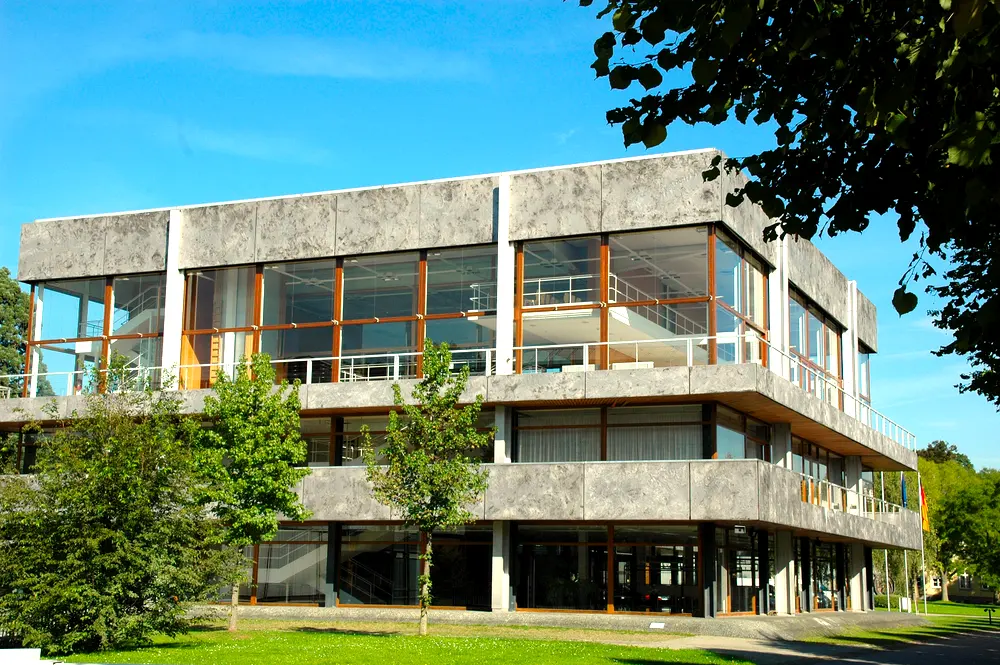
On the morning of 15 November 2023 the presiding judge of the Second Senate in Karlsruhe read out a ruling whose scope became clear to most listeners only by the evening. The Bundestag, so the eight judges unanimously, had violated the constitution when at the beginning of 2022 it shifted credit authorisations of sixty billion euros, approved for the pandemic and not used, into a fund for climate protection and modernisation. The money the government had earmarked for the coming years, for building renovation, chip factories, rail and hydrogen, no longer existed with this sentence. A year later the coalition broke apart, not solely, but also over the gap the ruling had torn.
To understand what was at stake one must know two sentences of the constitution inserted in 2009, when the financial crisis drove up public debt. Since then the federal government may take on new loans of only 0.35 per cent of economic output per year, about fifteen billion euros; the states none at all. That is the debt brake. For natural disasters and extraordinary emergencies beyond the state's control, the Bundestag may suspend the rule by simple majority, which it did three times in the pandemic and for which it approved loans of 240 billion in 2021. Sixty of those were left over. The new government that took office at the end of 2021 had set itself climate protection and at the same time promised to comply with the debt brake again from 2023. Both together did not add up. So it decided not to let the unused authorisation lapse but to book it into the climate fund: the crisis, so the reasoning, had weakened the economy, and investment in the future was the remedy for its consequences.
One could consider this reasoning transparent, and the opposition did: 197 members of the Union sued. It would, however, be worth asking whether the government had a choice. The debt brake had been written in 2009 for a world in which interest rates seemed high and investment needs manageable; in 2022 interest rates were at zero and the country faced the task of rebuilding its energy supply, its industry and its infrastructure within two decades. That a rule meant to prevent consumption on credit now prevented investments that would pay off over decades, many economists considered a design flaw. The government, one is inclined to think, only did what its mandate required, on the only path the rule left it.
The court, however, had to judge not economics but procedure, and in that respect its answer was hard to refute. An emergency, the judges said, justified loans only if a comprehensible connection existed between it and the spending; the Bundestag had not shown that for the climate fund, especially since the funds had been earmarked for years ahead, long after the end of the pandemic. Loans approved in one year could not be used up in later years, for otherwise any exception could be turned into a stockpile. And an exception that could be kept in stock at will was no longer a rule. Although the ruling hit the government, it was in this respect less a ruling against it than against a practice earlier governments had also cultivated: running special funds alongside the budget to circumvent the brake without touching it.
Both sides were therefore right, and that was exactly the problem. The government was right that the country needed the investments and the rule prevented them. The court was right that a rule one circumvents is none, and that the way to change it is in the constitution: a two-thirds majority of the Bundestag. The government did not have that, and the opposition that could have provided it refused, until it governed itself and loosened the brake in 2025 for defence and infrastructure, with the votes of those it had previously let fail. It can hardly be disputed that this sequence was not determined by principles.
What the ruling could not and did not want to deliver was the decision behind it: how much debt a country may take on for its future. The court returned it to the place where it belongs, namely the Bundestag, and in doing so accepted that at first nobody there wanted to take it. One can consider that remote from reality. One can also consider it the only answer a constitutional court may give: that the constitution applies even when it is inconvenient, and that it is for the elected to change it when it no longer fits. In any case, the losers in Karlsruhe were neither the plaintiffs nor the defendants, but those who had been waiting for the sixty billion.