A2.2 · 43 of 44
Suchbild: Das Kinderzimmer
Lesson · 3 rules · you practise after the first one Book · ch. 1
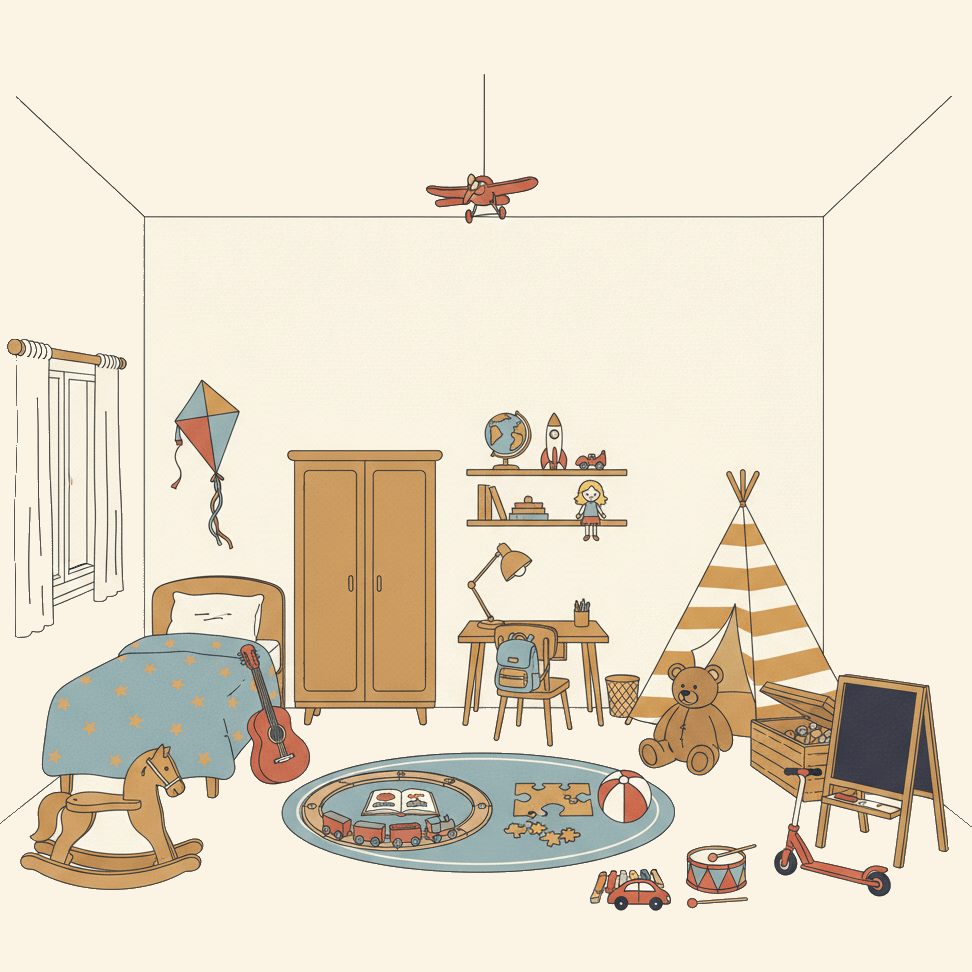
A child's bedroom full of toys: tap each thing in the picture, then give it its article.
- 1Compounds in the bedroom: the last part decides
- 2Same first part, different articles
- 3Many words in -e are feminine
Why this matters
A picture hunt instead of a deck: one cheerful, slightly messy child's bedroom with 32 things to find in it, every one an everyday noun — das Bett, der Kleiderschrank, die Eisenbahn, das Schaukelpferd, the toys on the rug and the kite on the wall. The prompt asks a question like Wo ist der Teppich? and you tap the object in the picture. A tap on the wrong object tells you what you hit and you keep looking; after three misses the right one is shown. Each find shows its label, coloured by its gender, then leaves a small tick in that colour, so you can see what you have already found. Once you have passed a run, the hunt gets harder: the prompt hides the article (Wo ist ___ Eisenbahn?), and after the find you pick der, die or das yourself. No object is asked twice in the same run.
Report a problem
Exercise
Suchbild: Das Kinderzimmer · A2.2
No single question is on screen — the report is about the whole exercise.
Reports go to the forum, where anyone can read them and the answer is kept for the next learner. To send one — and to be told when it is answered — sign in first. It takes one email, and no password.
Signing in lets us reply to your report, and shows you the answer the next time you are here. We email you a one-time link: no password, and nothing is shared with anyone.