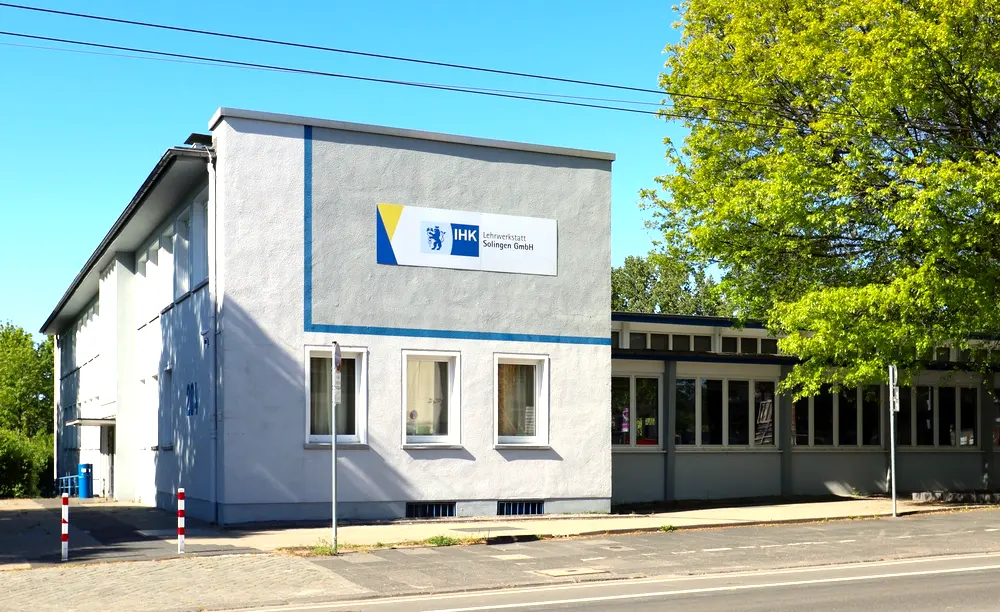
Lea is seventeen, and since 1 September she has had a trade: she is an apprentice, Azubi for short, training as a mechatronics technician in a medium-sized firm near Stuttgart. Three days a week she stands in the workshop, two days she sits in the vocational school. She receives a salary, about 1,100 euros a month, and in three and a half years she will take an exam that is valid throughout Germany.
That is called dual training, and it is what foreign delegations most often come to see in Germany. Dual means: two places. The company teaches the practice, the vocational school the theory. Around 1.2 million young people are currently in such training, in about 320 recognised trades, from baker to IT specialist. The rules for each trade are laid down in a regulation written jointly by employers, unions and the state. That is why every firm knows what a trained electronics technician can do, no matter where he learnt.
The system has advantages you can see in figures. Youth unemployment in Germany is one of the lowest in Europe, because the transition from school to work does not lead across a gap but through a contract. Whoever completes the training has work experience, has earned money and often a permanent job in the same firm. And whoever wants more later can do the master craftsman's exam or study.
Still, the model has a problem. More and more young people plan to study after school, because a degree promises more prestige and later more salary. At the same time it is not easy for many to decide at sixteen which trade they want to do all their life. The consequence: in 2024 almost 70,000 training places stayed unfilled, while at the same time tens of thousands of young people found no place because wish and offer did not match. Bakeries, butchers and hotels search desperately; media designers and animal keepers have too many applicants.
Lea decided consciously against studying. 'I had no desire to spend another five years just reading,' she says. 'Here I see in the evening what I have done. And I earn my own money.' Whether she will study later she leaves open. The path is open to her, in both directions.