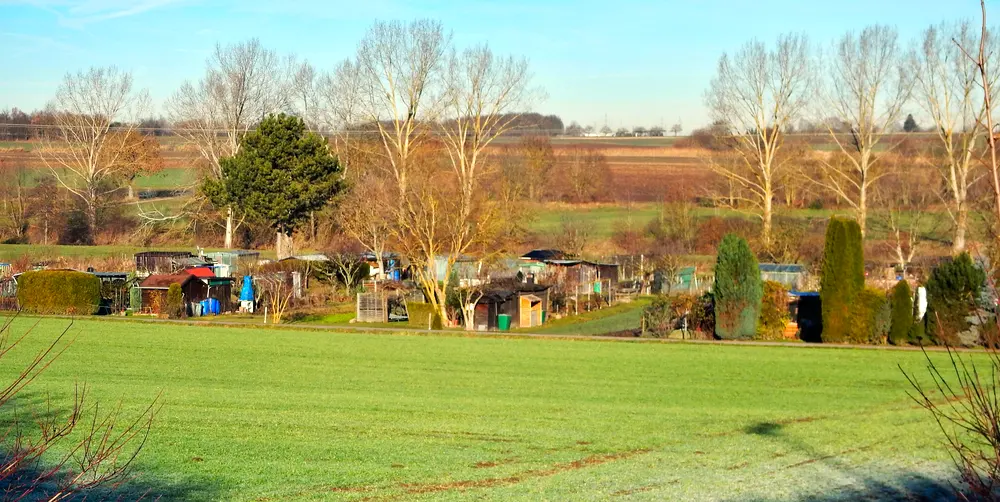
Whoever travels by train into a big German city sees them shortly before the station: hundreds of small gardens, each with a fence, a hedge and a small hut, in rows like a village of dolls' houses. These are allotments, popularly called Schrebergärten. There are around 900,000 in Germany, organised in about 14,000 associations, and they are so important that they have their own federal law: the Federal Allotment Garden Act of 1983.
The name comes from a Leipzig doctor. Moritz Schreber had the idea in the 19th century that children from the cramped flats of the industrial city needed fresh air. When the factories grew and working-class families lived in dark back yards, a school director founded the first Schreber association in Leipzig in 1864 with a playground; the parents laid out gardens at the edge, and soon the gardens were more important than the playground. If you had little money, a garden meant potatoes, beans and fruit for the winter. In the two world wars the allotments saved many cities from hunger.
The law still regulates what an allotment is. The garden's area should not exceed about 400 square metres. A third of the area must serve the growing of fruit and vegetables; whoever has only lawn and flowers gets a letter from the board. The hut may be at most 24 square metres, and living there is not allowed. In return the lease is low: often less than thirty euros a month, because the law protects the price. Added to that are the association's rules: quiet hours, communal work, hedge height.
Although the rules are strict, or perhaps precisely because of that, the gardens are more sought after today than for decades. For a long time they counted as a hobby of older men with garden gnomes. Then came young families who cannot afford a flat with a garden in the city, and with the pandemic came the rest. In Berlin tens of thousands are now on waiting lists; in some districts you wait over ten years. When a garden becomes free, the association decides, and families with children have priority.
What the new gardeners are looking for is no longer a winter without hunger. It is peace, earth under the fingers and a place where the children can play without traffic. The third of vegetables they accept. Many discover in the process that a home-grown tomato tastes different.