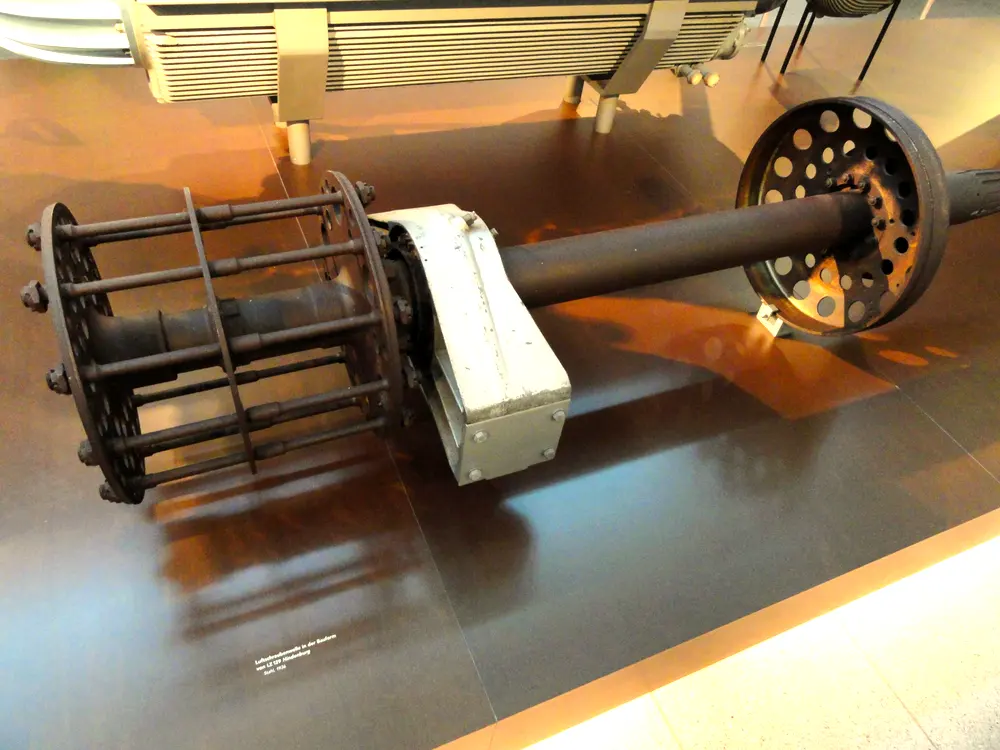
In March 1936 the largest flying object humans have ever built took off in Friedrichshafen on Lake Constance: the airship LZ 129 Hindenburg. It was 245 metres long, three times as long as a modern wide-body aircraft, and held 200,000 cubic metres of gas. In its belly lay a hotel: two decks with 50 cabins, a dining room with white tablecloths, a reading room, a promenade with slanted windows through which you saw the ocean, and even a smoking room whose door closed airtight. The Hindenburg was not only a means of transport but also a symbol: Germany showed the world what it could do.
Ten times in 1936 it flew to New York and back, in two and a half days instead of the five a ship needed. The passengers, mostly rich Americans and businessmen, paid 400 dollars, as much as a car. For that they travelled both faster and more calmly than on any ship: the airship floated 200 metres above the water, you heard neither engines nor wind, and a glass of wine on the table did not tremble.
Everyone on board knew the gas in the hull burned, but there was no choice. Only the United States possessed safe helium, and they sold it neither to Germany nor to any other country. So the Hindenburg flew with hydrogen, the lightest and most flammable gas there is. The bigger the ship, the more of it it carried through the sky.
On 6 May 1937 the Hindenburg approached the landing field at Lakehurst near New York after a thunderstorm. During the landing, the ropes already hanging to the ground, a flame burst from the hull at the tail. Within 34 seconds the whole ship was in flames and sank burning to the ground. Of the 97 people on board 35 died, plus one worker on the ground. That 62 survived was because the ship fell slowly and many jumped from the windows. A radio reporter who was to broadcast the landing wept into the microphone; the whole world heard his recording.
The cause was never fully explained. Probably an electrical discharge after the thunderstorm ignited escaping hydrogen. Because of the disaster and because of the pictures that went around the world, no passenger airship ever took off again. The future belonged to aeroplanes, which were faster but never again so quiet.