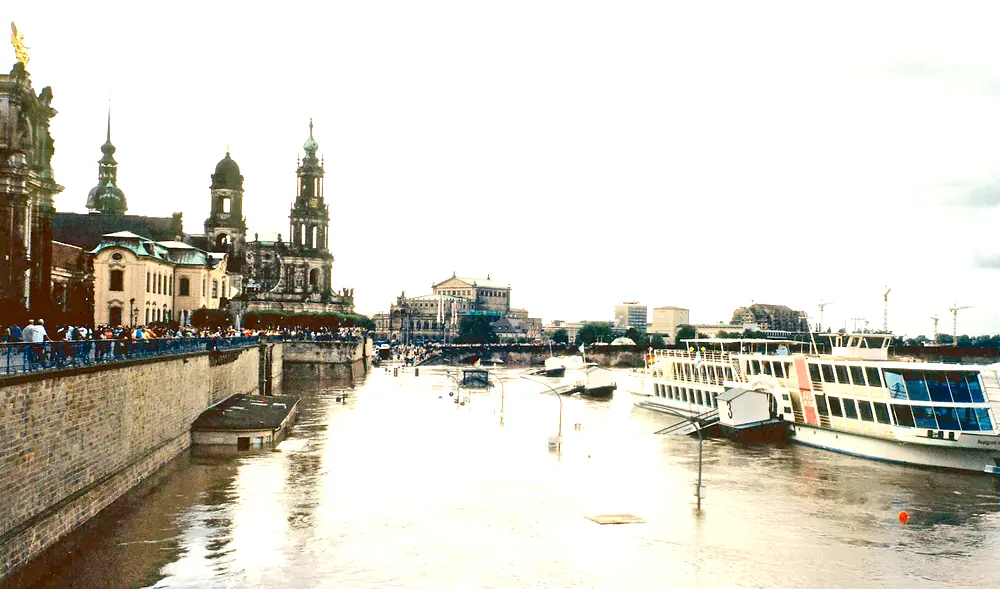
In August 2002 it had rained over Central Europe for days, as heavily as not for decades. In Saxony over 300 litres per square metre fell in a single day. First the small rivers from the mountains overflowed their banks. In Dresden that was the Weißeritz, a stream the city had forced into a narrow concrete bed a hundred years earlier. On 12 August the water sought its old bed back, and the old bed led right through the city: the main station was flooded, the tracks stood two metres under water, and the trains were diverted.
Then came the Elbe. Its level, normally around two metres, rose a metre every day. On 17 August it reached 9.40 metres, the highest since measurements began in 1275. The old town lay under water: the Zwinger, the Semperoper, the Hofkirche. In the opera the water stood in the auditorium up to the third row. 30,000 people were evacuated from their homes; the hospitals were cleared, the patients flown out by helicopter.
What was done in those days Dresden tells to this day. The paintings of the Old Masters gallery, among them the Sistine Madonna, were carried to the upper floors during the night by staff and soldiers; four thousand works were saved that way. In front of the Zwinger and on the Terrassenufer walls of sandbags were built, and those who built them were not the city alone: tens of thousands of volunteers came, students, pensioners, tourists, and filled sacks in chains until their hands bled. The Frauenkirche, which was being rebuilt at the time, stayed dry because its construction pit had been closed in time.
When the water had drained away after a week, the damage showed: over six billion euros in Saxony, eleven in all of Germany, twenty-one dead. Afterwards much was changed. The Weißeritz got its old bed back, the dykes were raised, flood walls built, warning systems set up. Eleven years later, in June 2013, the Elbe rose again to almost nine metres. This time the old town was hardly damaged, because people had learnt. But the people of Dresden filled sandbags again, out of habit, some said, and out of gratitude.