Anyone who drives about eighty kilometres south-west from Berlin reaches a village that at first sight is nothing special: one street, a few dozen houses, fields all around. Feldheim, a district of the small town of Treuenbrietzen in Brandenburg, has around 130 inhabitants. Even so, groups of visitors travel here from all over the world. They want to see something that exists almost nowhere else: a village that supplies itself entirely with electricity and heat – through lines that it owns itself.
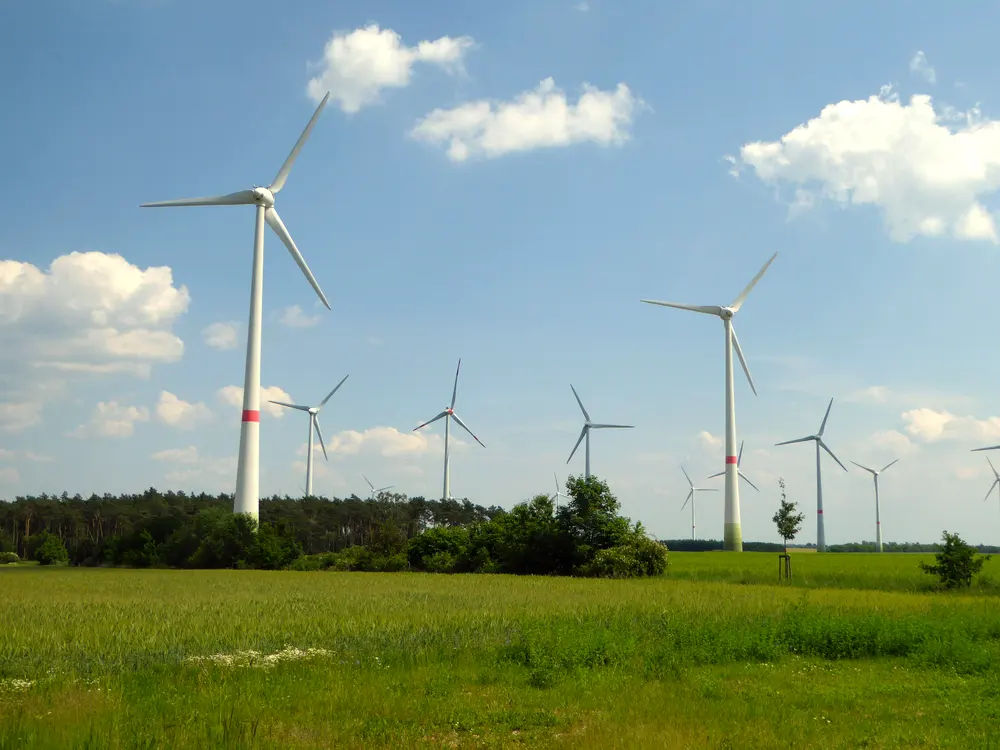
The story began in the mid-nineties, when a young entrepreneur had the first wind turbines put up in the fields around the village. The wind blows strongly here, and the farmers were happy to lease out their land. Over the years the wind farm grew to dozens of turbines. Later a biogas plant was added, which runs on slurry and maize from local farming and supplies heat as well as electricity.
But the electricity generated on the doorstep flowed into the public grid, and the people of Feldheim paid the same price for it as everyone else. They wanted to obtain it directly. The grid operator, however, refused to sell or lease its grid to the village. So the people of Feldheim took an unusual decision: they had their own electricity and heating network laid, parallel to the old one. Every household that wanted to take part paid 3,000 euros; the rest was financed by the company, subsidies and loans. In October 2010 the network was inaugurated.
Since then the supply has belonged to a company in which the households, the town and local businesses hold shares. The people of Feldheim decide on the price themselves. According to media reports they have for years paid around twelve cents per kilowatt hour, while the average in Germany was most recently about forty cents. When energy prices rose sharply all over the country in 2022, the price in the village stayed stable.
Residents report that the project has changed more than the electricity bill. People have learned to decide together, they say in the village, and jobs have been created. Critics object, however, that Feldheim cannot simply be copied. The village is small, they say, it has a lot of space and a lot of wind, and without subsidies the second network would hardly have been affordable. In fact the village needs only a fraction of the electricity its plants generate; by far the largest part is still fed into the public grid.
In the meantime the village itself has become a kind of school. An information centre has been set up in a former inn, where school classes, mayors and delegations from abroad find out how the supply works. On the edge of the village there has also been a large battery storage unit since 2015. It balances out what wind and sun cannot: it takes in electricity when too much is generated and releases it when the grid needs it. For the people of Feldheim all this has long since become everyday life.
Perhaps the real lesson therefore does not lie in the technology. In many municipalities people protest against new wind turbines because the residents have to put up with the noise and the changed view while the profit goes to others. In Feldheim it is the other way round: whoever sees the turbines also benefits from them. Acceptance, the example shows, arises where people are given a share – not only in the decisions but also in the returns.