Interview: Sollte die Schule später beginnen?
Press play and listen as many times as you like — the transcript appears once you check your answers.
B2.2 · 31 of 46
Lesson · 2 rules · you practise after the first one
Ein Radiointerview von etwa drei Minuten mit einer erfundenen Schlafforscherin über eine echte Debatte: Sollte die Schule für Jugendliche später beginnen? In Deutschland fängt der Unterricht meist um acht an, manchmal früher, und Schlafforscher sagen seit Jahren, dass das gegen die innere Uhr der Dreizehn- bis Achtzehnjährigen läuft. Die Zahlen im Gespräch stammen aus echten Untersuchungen, unter anderem aus der Schweiz, wo zwei Schulen den Pflichtbeginn um eine Stunde nach hinten gelegt haben. Grammatisch hörst du zwei Dinge, die du zuletzt geübt hast. Erstens das Futur I als Vermutung über die Gegenwart: Die meisten Ihrer Hörer werden jetzt denken, dass Jugendliche einfach zu lange aufbleiben. Zweitens das subjektive sollen, mit dem die Moderatorin wiedergibt, was andere behaupten: Eine halbe Stunde weniger Schlaf soll die Leistung um dreißig Prozent senken. Die Forscherin nimmt genau diese Behauptung auseinander. Höre darauf, wo jemand etwas weiß und wo jemand etwas nur gehört hat.
Press play and listen as many times as you like — the transcript appears once you check your answers.
Presenter: In most German schools the bell rings at eight, in some as early as half past seven. Sleep researchers have been saying for years that this is too early, at least for teenagers. With me is the chronobiologist Professor Lindqvist. Ms Lindqvist, most of our listeners will now be thinking: the teenagers should simply go to bed earlier. What do you say to them? Prof. Lindqvist: That unfortunately it does not work. In puberty the body clock shifts back by one to two hours. That is biology, not laziness. A fifteen-year-old who goes to bed at eleven often lies awake until midnight because his body is not ready yet. At seven you then wake him in his deepest sleep phase. For his body it is five in the morning. Presenter: It is said that even half an hour less sleep is supposed to lower performance by thirty per cent. Prof. Lindqvist: That figure haunts many articles, but in such a sweeping form it is not proven. I would be careful there. What is well established: teenagers who chronically sleep too little are less able to concentrate, more often ill and more often low. And the lack of sleep is measurable: on average German pupils are short of one to one and a half hours on school days compared with the weekend. Presenter: Are there schools that do it differently? Prof. Lindqvist: Yes, and the most interesting is a trial from Switzerland. Two schools moved the compulsory start back by an hour, but the pupils were still allowed to come early if they wanted. Almost all of them, 95 per cent, came later, on average by just under forty minutes. They slept about 45 minutes longer on school days because they got up later but did not go to bed later. That refutes the most popular counter-argument: that the teenagers would immediately sleep the gain away again. Presenter: And the marks? In Singapore they are said to have improved markedly. Prof. Lindqvist: In Singapore the start was moved by 45 minutes, and afterwards the pupils were better rested and more content. On performance I am careful again. There are studies that show better marks and others that find no difference. That pupils are more awake is certain. That they become better mathematicians as a result is plausible but not proven. Presenter: Then why does so little change? Prof. Lindqvist: Because school is not alone in the world. If lessons start at nine, they end at three. The buses run to the old timetable, the parents have to be at work at eight, the sports clubs need the halls in the afternoon. And, this surprises many: in surveys the pupils themselves often do not want to start later at all, because they do not want to lose the free afternoon. Presenter: So what would your proposal be? Prof. Lindqvist: No revolution, but flexitime. The first lesson voluntary, compulsory start at nine. Whoever is awake early comes early; whoever is not comes at nine. That costs nothing and has proved itself in Switzerland. And class tests should as a rule not be written in the first lesson. That would be a start that hurts nobody.
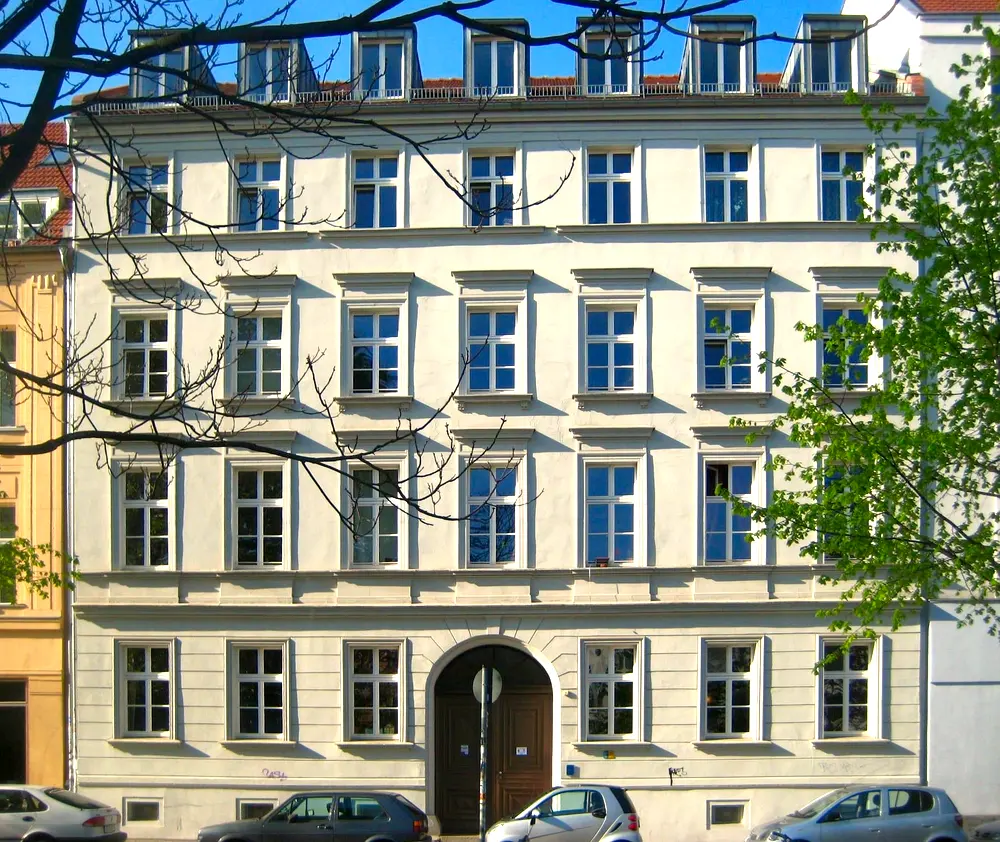
Photo: Jörg Zägel, CC BY-SA 3.0, Wikimedia Commons
Exercise
Hören: Schule um neun? · B2.2
No single question is on screen — the report is about the whole exercise.
Reports go to the forum, where anyone can read them and the answer is kept for the next learner. To send one — and to be told when it is answered — sign in first. It takes one email, and no password.
Signing in lets us reply to your report, and shows you the answer the next time you are here. We email you a one-time link: no password, and nothing is shared with anyone.
Everything works without an account. Signing in backs your progress up, carries it to your phone, and lets you post on the forum.
One email, no password. We email you a one-time link: no password, and nothing is shared with anyone.