That there are fewer insects than there used to be, many people had noticed long ago. The windscreen stayed cleaner after a summer drive, less buzzed around the lamp in the evening. But a feeling is not evidence. The figure that turned the suspicion into a fact came in October 2017 from a town on the Lower Rhine: Krefeld.
There the Entomological Society, an association of volunteer insect specialists, had been doing something since 1989 that no university would have kept up for so long. In 63 nature reserves, mainly in North Rhine-Westphalia, the members set up tent-like traps, so-called Malaise traps, in which flying insects are caught. From April to November the traps were emptied regularly and the contents weighed. The society actually only wanted to know which species occur where. It kept the jars of alcohol and insects collected over 27 years on shelves, and only when scientists from the Netherlands and Germany analysed the series did it become clear what was in them.
The result, published in the journal PLOS ONE, was clearer than even the authors had expected: the total mass of flying insects caught had fallen by 76 per cent between 1989 and 2016, and in high summer, when most things fly, by as much as 82 per cent. A development suspected for decades had a solid figure for the first time. The study was cited worldwide, the word Insektensterben entered the news, and in 2019 the federal government adopted an action programme for insect protection.
All the more important to understand what the figure says and what it does not. What was measured was biomass, that is weight, not the number of species. It was measured in protected areas, not on fields or in cities. And the traps did not stand in the same places every year. Critics therefore objected that the decline could not be quantified from the data as precisely as the headlines claimed. The authors themselves were more cautious than the headlines: their figure applies to the areas studied, and they could not prove the cause.
They could, however, rule out a good deal. Neither the weather nor changes within the protected areas themselves explained the decline. What almost all the sites had in common was their surroundings: nine out of ten traps lay in the middle of intensively farmed land. The researchers therefore suspect that fertiliser, pesticides and the disappearance of flowering areas hit the insects even where they are supposed to be protected. A protected area, so the conclusion, is only as healthy as the landscape around it.
What makes the loss weigh so heavily is the position of insects in the fabric of nature. They pollinate three quarters of crop plants, break down what dies, and are the food of birds, bats and fish. Where the insects are missing, the birds soon go too: in Germany the number of farmland birds has fallen by about half since 1980. The loss the Krefeld volunteers weighed is therefore not the end of the chain but its beginning.
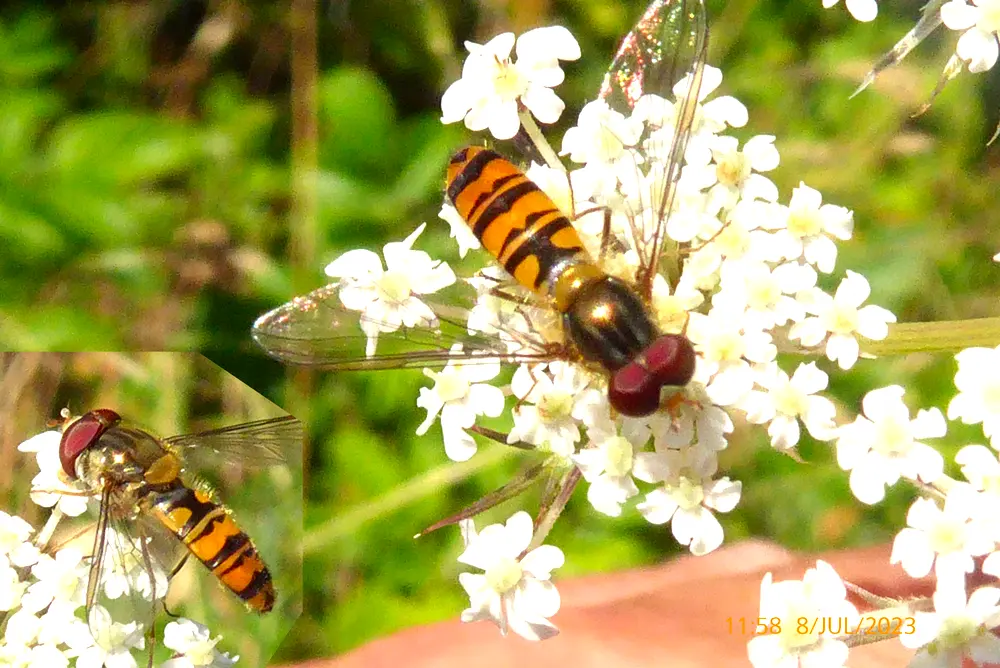
The Krefeld jars now stand in an air-conditioned archive. The analysis continues, species by species: among hoverflies, for instance, the number of animals caught at six sites fell from around 17,000 to 2,700. But perhaps the most important lesson of the study concerns research itself. The most valuable data came not from a large programme but from people who emptied traps at weekends for decades without knowing what for.