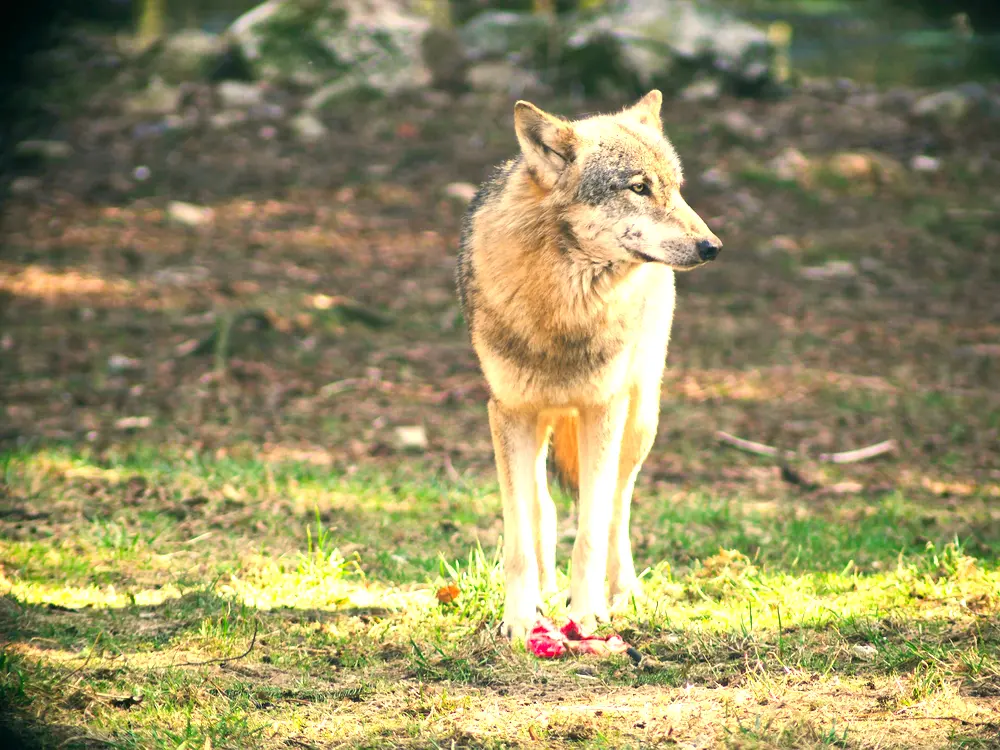
In the year 2000, on a military training area in Upper Lusatia in Saxony, something happened that had not happened in Germany for a century and a half: a she-wolf gave birth to cubs. The parents had migrated in from Poland, across the Neisse, without help and without permission. Nobody had released them. They had simply come, because the wolf has been strictly protected throughout Germany since 1990 and because a military exclusion zone with plenty of game and few people is exactly what a pack needs.
Since then the wolf has spread as hardly anyone would have expected. In the monitoring year 2023/24 the authorities counted 209 packs, plus pairs and single settled animals, most of them in Brandenburg, Lower Saxony and Saxony. The population is still growing, but more slowly than in the years before; in the eastern states the suitable areas seem gradually to be occupied. For nature conservation this is one of Europe's great success stories. A predator that had been systematically exterminated in the 19th century is back, and on its own paws.
As much as people agree on the figures, they disagree on what they mean. While conservationists count how many packs have survived the winter, shepherds count how many animals were killed in the night. Several thousand farm animals a year, mainly sheep and goats. For a sheep farm that hardly makes a profit anyway, a single attack can mean the end. Added to that is something no statistic records: the experience of coming to the pasture in the morning and finding your own animals dead in the grass.
The state pays compensation and funds livestock protection, that is high electric fences and specially trained dogs that live with the flock. Where both are used consistently, attacks fall markedly. In Brandenburg guardian dogs are now part of everyday life; in Bavaria, by contrast, where the wolf has only reappeared in the last few years, they are rare, and the alpine pastures in the mountains can hardly be fenced. In contrast to the areas in the north-east, there is little experience with the animal there and a lot of fear.
Although the wolf is strictly protected under European law, culls have therefore been argued over for years. Individual animals that have learned to get over fences may already be killed. Farming associations demand more: an upper limit and inclusion in hunting law. Conservation groups counter that culls destroy the packs without reducing the kills, because young, inexperienced wolves then tend to stick to easy prey.
That the wolf could come back at all is also due to a change that is easily overlooked: there is enough to eat again. The populations of roe deer, red deer and wild boar in Germany are higher than they have been for centuries, so high that foresters complain of damage in the woods. Around 95 per cent of the wolf's food consists of such game. Farm animals make up only a small part, but exactly that part decides the mood in the country.
One thing is undisputed: the wolf has not so far become dangerous to people in Germany. Since its return not a single attack on a human has been documented. The animals avoid us where they can. The argument about the wolf is therefore less an argument about safety than one about how much wilderness a densely populated country is willing to put up with, and who bears the costs.