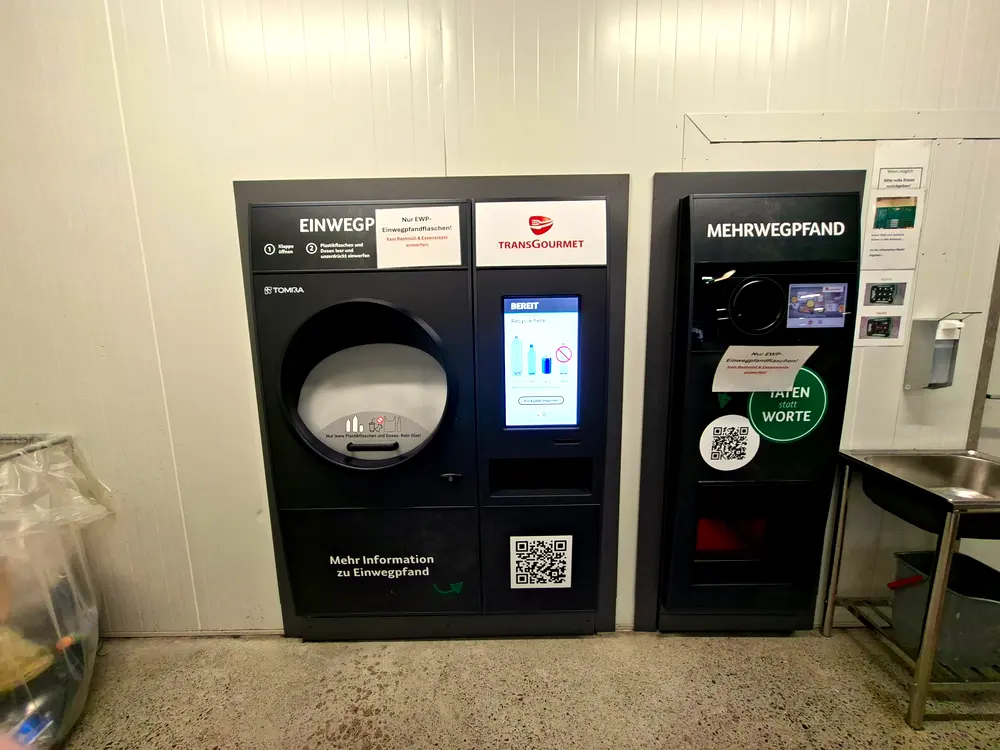
Anyone who buys a can of cola in Germany pays 25 cents more than the sign says and gets it back when they put the empty can into a machine. For visitors from abroad this is one of the first lessons of everyday life; for locals it goes without saying. Hardly anyone still knows what the deposit was actually introduced for. And even fewer know that it missed exactly that goal.
The single-use deposit was introduced on 1 January 2003. The occasion was not litter at the roadside but a figure: the share of returnable bottles, that is bottles that are washed and refilled up to fifty times. That share had fallen below the legally set limit of 72 per cent since the nineties. The deposit was meant to make single-use unattractive and so save the returnable bottle. If customers returned to returnables, so the hope, the mountain of plastic and tin would shrink by itself.
The first part of the calculation worked out, and how. As a result of the deposit, around 98 per cent of all single-use bottles and cans come back today; without the deposit they would lie in parks, rivers and residual-waste bins. In hardly any country in the world is so much packaging collected and recycled. Anyone walking through a German city in summer sees people fishing bottles out of litter bins because 25 cents is money to them. As a collection system the deposit is a success.
But the second part failed. Instead of returning to returnables, customers kept buying single-use, only now they brought it back. The returnable share kept falling: from around 70 per cent at the turn of the millennium to about 42 per cent today. The legal target is now 70 per cent, and almost no retailer reaches it. Only for beer did the returnable bottle remain the rule, because breweries and customers stuck to it.
How could that happen? Through the deposit, of all things the guilty conscience disappeared. A returned plastic bottle feels like a contribution to the environment, although it is shredded after a single use. Added to that was the behaviour of retailers: discounters relied on their own single-use bottles, which are easier to transport and store than heavy returnable crates. With the help of the deposit system they could even buy the material back cheaply. In contrast to a returnable bottle, which has to go back to the bottler, a single-use bottle stays where it is handed in.
A look across the border shows that it can be done differently. Norway and Denmark have similar deposit systems, but there the material of the bottles is taxed in a targeted way: the more a package is recycled, the lower the levy. And in Austria, which introduced a single-use deposit in 2025, it was laid down from the start that retailers must offer a minimum share of returnables, visibly and at the same price.
What would have been needed? Experts name two things above all: a clearly noticeable levy on single-use that is not refunded, and labelling that makes the difference visible on the shelf. Since 2019 shops at least have to indicate what is single-use and what is returnable; since 2022 the deposit also applies to juice and wine in plastic. Whether that is enough is open.
The deposit therefore tells a bigger story than that of 25 cents. It shows how a measure can achieve its secondary goal brilliantly and miss its main goal, and how hard it is to correct a law that everyone considers a success.