Die Weltmarktführer, die niemand kennt
Wer die deutsche Wirtschaft verstehen will, sollte nicht nach Wolfsburg, Stuttgart oder Frankfurt fahren, sondern nach Künzelsau, Haiger oder Wangen im Allgäu.
Continues on the next page
C2.1 · 2 of 38
Lesson · 2 rules · you practise after the first one
Ein Wirtschaftstext von etwa 720 Wörtern über ein deutsches Phänomen, für das der Ökonom Hermann Simon 1990 einen englischen Namen fand: die Hidden Champions. Es sind Unternehmen, die auf ihrem Gebiet zu den drei größten der Welt gehören, weniger als fünf Milliarden Euro umsetzen und außerhalb ihrer Branche kaum jemand kennt, weil sie Dinge herstellen, die der Endkunde nie sieht: Dosiersysteme, Etikettiermaschinen, Lkw-Kupplungen, Schweißdraht. Von den etwa 3.400, die Simon weltweit zählt, sitzt fast die Hälfte in Deutschland, viele in Kleinstädten, die man auf der Karte suchen muss. Der Text fragt, warum, und was diese Firmen heute bedroht. Er ist in der Fachsprache der Wirtschaft geschrieben, deren Wortschatz du gerade gelernt hast: der Mittelstand, die Wertschöpfung, der Weltmarktanteil, die Exportquote, die Eigenkapitalquote, der Familienbetrieb, die Nachfolgeregelung, der Standort. Und sie lebt von Kollokationen, festen Verbindungen, die man nur als Ganzes richtig trifft: eine Marktführerschaft innehaben, Marktanteile gewinnen oder einbüßen, Gewinne erwirtschaften, Verluste verbuchen, eine Nische besetzen, Investitionen tätigen, Arbeitsplätze schaffen oder abbauen, Fachkräfte gewinnen, einen Auftrag erteilen oder erhalten.
Wer die deutsche Wirtschaft verstehen will, sollte nicht nach Wolfsburg, Stuttgart oder Frankfurt fahren, sondern nach Künzelsau, Haiger oder Wangen im Allgäu.
Continues on the next page
Whoever wants to understand the German economy should go not to Wolfsburg, Stuttgart or Frankfurt but to Künzelsau, Haiger or Wangen im Allgäu. In such places of ten to twenty thousand inhabitants sit companies whose names hardly anyone outside their industry knows and which nevertheless dominate the world in their field: makers of fastening technology, labelling machines, fifth-wheel couplings for trucks, pumps, filters, welding wire, dosing systems for adhesive, special scissors, cutting tools and dental drills. The economist Hermann Simon, who has been counting them since the eighties, gave them a name in 1990 that has caught on although it is English: Hidden Champions. His definition has three parts. The company ranks among the three largest in the world in its market or is number one on its continent; it achieves a turnover of less than five billion euros; and it is largely unknown to the public. Of the roughly 3,400 firms worldwide that meet these criteria, Simon has counted about 1,500 in Germany, almost half, with one per cent of the world's population. The United States come to about 350, Japan to 220, China to just under 100. This distribution is no accident, and whoever explains it explains at the same time why Germany became export world champion without producing a single firm the size of an Apple or Toyota. The Hidden Champions live in niches they mostly created themselves: they make not machines but the one machine that solves a problem nobody else wants to solve because the market seems too small. Too small for a conglomerate, not too small for the world. A firm that builds special valves for the food industry may have twenty customers in Germany; worldwide it has two thousand, and because it is the only one building exactly this valve, it sets the price. The export ratio of many is above seventy per cent; some achieve ninety per cent of their turnover abroad and yet have never left the site where the grandfather started. The second reason is the ownership structure. Most Hidden Champions are family firms, and families think in generations, not quarters. They make investments that pay off only in ten years, keep their skilled workers in crises instead of cutting jobs, and finance themselves from their own profit: equity ratios of forty, fifty, sixty per cent are usual where listed groups have to manage with twenty. Such a firm can book losses for two years without a bank getting nervous, because it needs no bank. Add to that a training system that produces skilled workers who can not only operate a machine but improve it, and the closeness of firm and customer: engineers of the Hidden Champions spend, by Simon's count, more than twice as much time with the customer as those of their competitors. They know what is needed before anyone orders it. All this has a flip side, and it is showing right now. The niche that protects can become a trap when technology shifts: a world market leader in injection pumps has a problem when cars go electric, and it has it all the more severely the better it was, because it bet everything on one card. The family that ensures continuity ensures it only as long as someone takes over; by estimates of the Institute for SME Research around 190,000 companies face the succession question by 2026, and in many the children do not want to or cannot. The small-town location that creates loyalty creates no applicants: whoever looks for software developers in Künzelsau competes with Berlin and San Francisco without being able to offer their attractions. And Germany itself as a location, with its energy prices, its bureaucracy and its taxes, appears less and less compelling to owners who earn two thirds of their turnover outside. More than half, surveys show, are shifting investment abroad or considering it. One should therefore not fall into the error of romanticising the Hidden Champions as if they were the better Germany. They are a model that arose at a certain time under certain conditions: a divided country without raw materials that after the war could sell only what others did not have, namely precision. That it worked so long speaks for the model. That it is creaking now speaks not against the firms but for the fact that conditions have changed. What remains is a lesson reaching beyond Germany: economic strength need not be big, loud and famous. It can sit in a village in the Black Forest, deliver dental drills to ninety countries and never get any of it into a newspaper. Until the succession question comes.
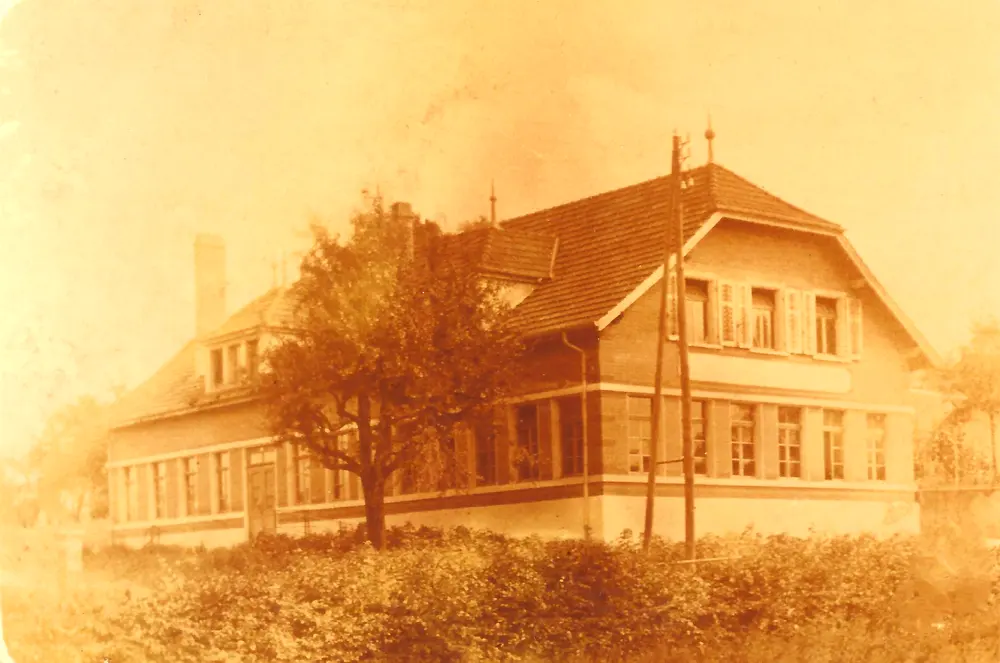
Photo: Markus Willimann, public domain, Wikimedia Commons
Exercise
Lesen: Die Weltmarktführer, die niemand kennt · C2.1
No single question is on screen — the report is about the whole exercise.
Reports go to the forum, where anyone can read them and the answer is kept for the next learner. To send one — and to be told when it is answered — sign in first. It takes one email, and no password.
Signing in lets us reply to your report, and shows you the answer the next time you are here. We email you a one-time link: no password, and nothing is shared with anyone.
Everything works without an account. Signing in backs your progress up, carries it to your phone, and lets you post on the forum.
One email, no password. We email you a one-time link: no password, and nothing is shared with anyone.