Radiogespräch: Tempolimit auf der Autobahn?
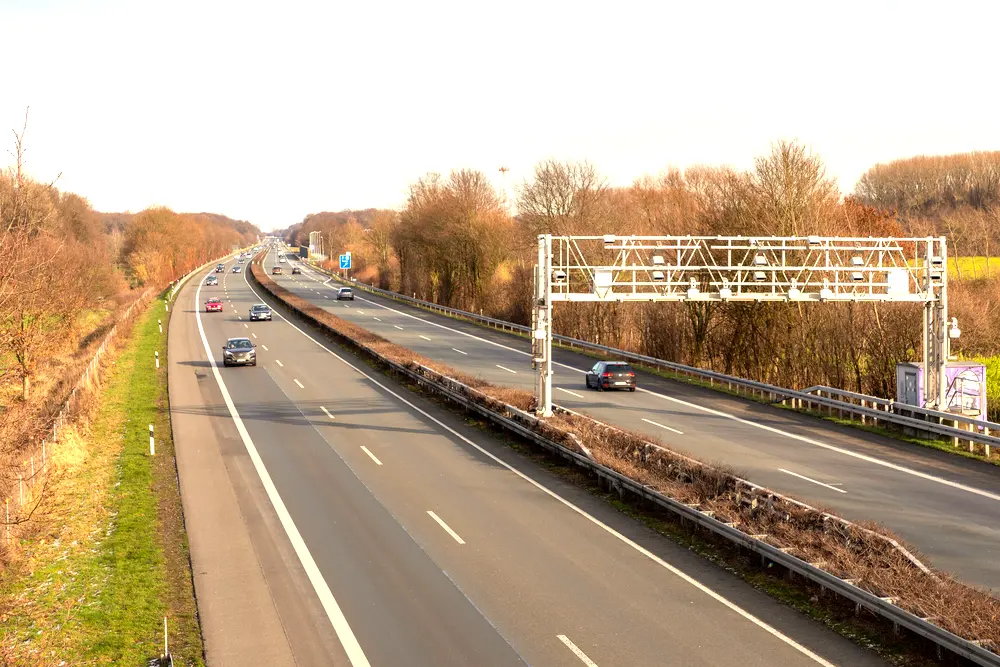
Press play and listen as many times as you like — the transcript appears once you check your answers.
B2.1 · 13 of 45
Lesson · 2 rules · you practise after the first one
Ein Radiogespräch von etwa drei Minuten über eine Frage, die in Deutschland seit Jahrzehnten gestellt wird: Soll auf der Autobahn eine Höchstgeschwindigkeit gelten? Eine Moderatorin, eine Verkehrsforscherin und ein Vertreter eines Autofahrerverbands. Beide Gäste nennen Zahlen aus echten Studien, und genau darum geht der Streit: Die eine Studie rechnet mit Tempo 120 und kommt auf eine große Ersparnis, die andere rechnet mit Tempo 130 und kommt auf eine kleine. Höre deshalb nicht nur auf die Zahl, sondern darauf, wozu sie gehört. Achte außerdem auf die Verben mit fester Präposition, mit denen man in einer Diskussion Stellung nimmt: sich für etwas aussprechen, auf etwas hinweisen, von etwas abhängen, an etwas zweifeln, sich auf etwas einigen. Am Schluss fragt die Moderatorin, worin sich beide einig sind. Diese Stelle ist leise, aber wichtig.
Press play and listen as many times as you like — the transcript appears once you check your answers.
Presenter: Good evening. Germany is one of the very few countries without a general speed limit on the motorway. 130 kilometres per hour is recommended but not required. This question has been argued over for decades. With me are the transport researcher Dr Sommer and Mr Vogt from a drivers' association. Ms Sommer, you are in favour of a limit. Why? Dr Sommer: For two reasons: climate and safety. In 2023 the Federal Environment Agency calculated what a limit of 120 would achieve. According to that calculation, around 6.7 million tonnes of CO2 a year would be saved. And that immediately and at almost no cost. You only have to put up signs. Mr Vogt: I would like to point to a different figure there. A study commissioned by the transport ministry arrives at only one to two million tonnes for 130. That is a fraction of what traffic emits in total. Dr Sommer: The two studies measure different things, Mr Vogt. Yours assumes 130 and counts only the direct effect of speed. The other assumes 120 and also takes into account that some people will then switch to the train or choose a shorter route. Mr Vogt: That is exactly what I doubt. Whether anyone leaves the car at home because of a ten-minute longer journey, nobody knows. And do not forget: on about thirty per cent of the network a limit already applies, permanently or part of the time. Most people do not drive faster than 130 anyway. Presenter: If most people do not drive faster anyway, what is the argument against a rule? Mr Vogt: That adults should be trusted with something. The motorways are our safest roads. Most fatal accidents happen on country roads, not on the motorway. Dr Sommer: That is true, but it is not an argument against a limit. On sections where one was introduced, serious accidents fell markedly. What matters is the difference between speeds. When one person is doing 200 and the other 110, every lane change becomes dangerous. Presenter: Mr Vogt, in surveys a majority now comes out in favour of a speed limit. Does that impress you? Mr Vogt: It depends on how you ask. At 130 many say yes, at 120 clearly fewer. I could live with 130 if, in return, the stretches where there are constant traffic jams were widened. Dr Sommer: We might even be able to agree on that. I would prefer 120, but 130 would be better than nothing. Presenter: Let us note: you do not agree on the figures, but you do agree that 130 would be a possible compromise. Thank you both.
Photo: Dietmar Rabich, CC BY-SA 4.0, Wikimedia Commons
Exercise
Hören: Streit ums Tempolimit · B2.1
No single question is on screen — the report is about the whole exercise.
Reports go to the forum, where anyone can read them and the answer is kept for the next learner. To send one — and to be told when it is answered — sign in first. It takes one email, and no password.
Signing in lets us reply to your report, and shows you the answer the next time you are here. We email you a one-time link: no password, and nothing is shared with anyone.
Everything works without an account. Signing in backs your progress up, carries it to your phone, and lets you post on the forum.
One email, no password. We email you a one-time link: no password, and nothing is shared with anyone.