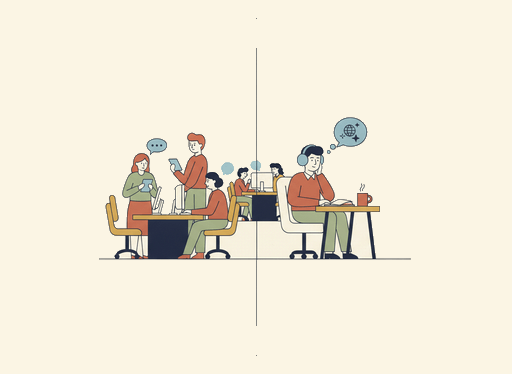
For some years working from home has often been presented as the ideal solution: no traffic jam in the morning, no noisy open-plan offices, more time for the family. Supporters stress above all the flexibility gained. Appointments could be better combined with family life, and anyone who wanted to work with concentration would be interrupted less often at home. A survey by the Institute for Labour Research shows that two thirds of employees who are allowed to work from home no longer want to give up this option. Many say they are more productive than in the office.
Critics, however, point out that the line between work and leisure blurs. Anyone who is constantly reachable ends up working more, not less. Indeed the same survey reports that a third of those questioned regularly answer e-mails in the evening and at the weekend. Added to this is a problem that becomes visible only after months: the informal exchange with colleagues is missing. Ideas that used to arise in the coffee kitchen now do not arise at all. Managers also report that new employees take longer to find their feet in the team.
Both sides have good arguments, and most companies have therefore introduced a mix: two or three days in the office, the rest at home. But this model too works only if there are clear agreements. When does one have to be reachable? When may the laptop stay closed? Which meetings take place on site?
The decisive thing is therefore not the place where work is done, but a clear arrangement of working hours. Companies that have introduced fixed core hours and one day without meetings report more satisfied employees – regardless of whether they sit at home or in the office. So working from home is neither curse nor blessing. It is a tool that has to be used correctly.