Every few years a small wave passes through the German newspapers. A new edition of the country's best-known dictionary has appeared, and with it a list: three thousand new words, among them, depending on the year, Balkonkraftwerk, Deutschlandticket, Klimakleber or Energiepreisbremse. The comments follow a fixed pattern. Some are glad that the language is alive; others complain that now even this nonsense is official. Both start from the same assumption: that an editorial office in Berlin decides what is German. The assumption is wrong, and in an instructive way.
The dictionary, founded in 1880 by the grammar-school teacher Konrad Duden and published since then in 29 editions, is today looked after by about twenty lexicographers. Their most important tool is not a feel for language but a corpus: a collection of digital texts consisting of around seven billion word forms, newspapers above all, but also novels, specialist literature, instruction manuals and speeches, which is continually added to. Programs search this collection for words that occur in it but are missing from the dictionary. Every year tens of thousands of such candidates turn up. The vast majority are eliminated at once: proper names, typos, compounds that everyone understands without ever having seen them, and words that appear in a single text only.
What remains is observed, and over years. A word must meet three conditions to be admitted: it must occur frequently, it must occur in different text types, and it must occur over a longer period. The third condition is the strictest. Pressed by readers who miss a buzzword, the editors regularly point to it: an expression that is everywhere one summer and gone the next has no business in the dictionary, especially since an edition stays in use for years. That is why new words typically reach the book three to five years late, and why every new edition seems slightly dated as soon as it appears. That is not a fault but intention.
Less well known is that words also disappear again. With the latest edition around three hundred were struck out, among them terms that hardly anyone had written for decades. Relying on frequency, the editors make this decision too, though more cautiously than with admission: once admitted, a word as a rule stays for several editions even if its numbers fall, since a reader who meets an old word in an old book should be able to look it up. A dictionary describes not only the present of the language but also its memory.
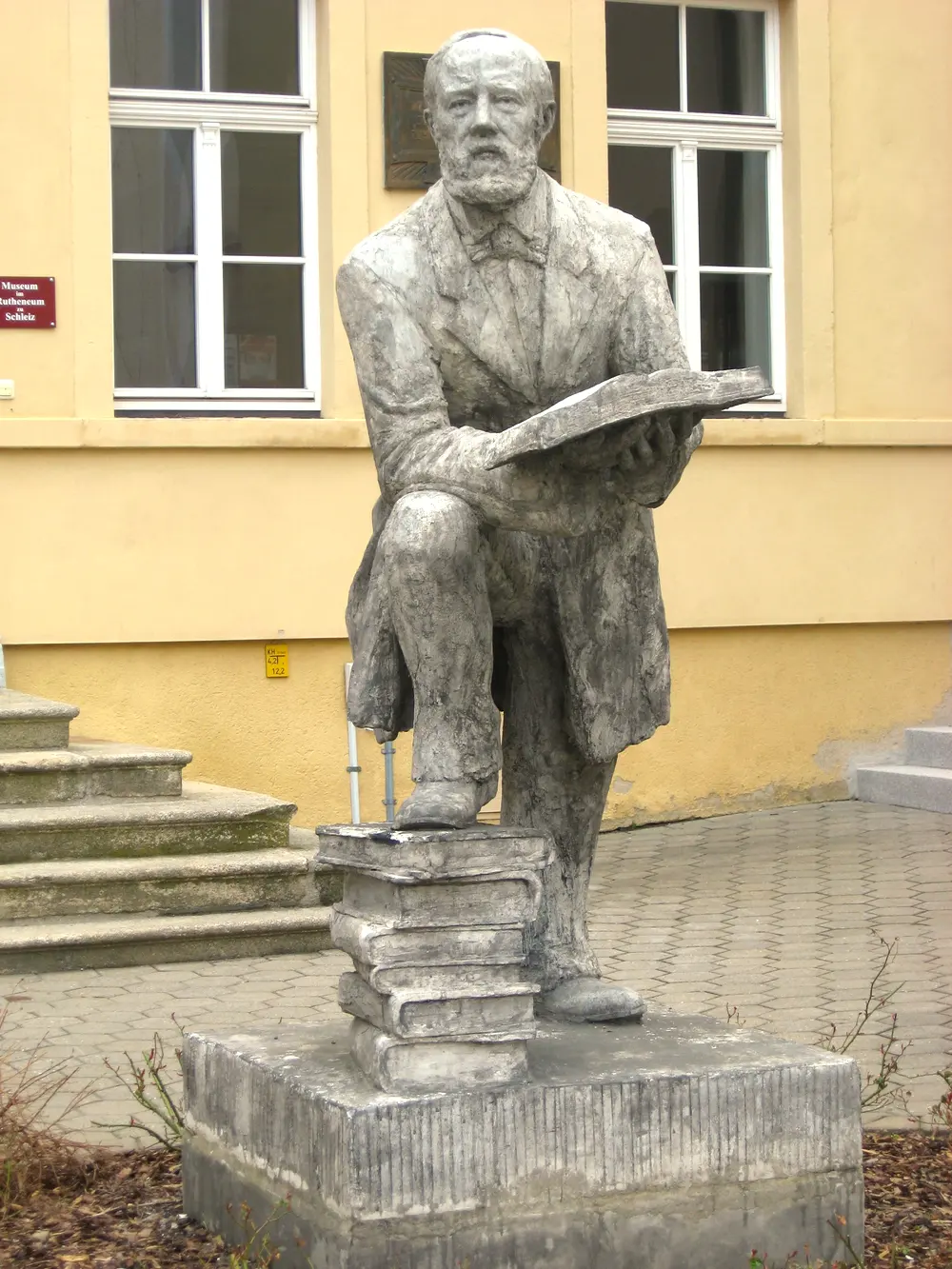
That a dictionary could get this far has to do with its origin. When Konrad Duden published his Complete Orthographic Dictionary in 1880, there was no uniform German spelling; every state of the new empire, sometimes every school, wrote differently, and Duden, head of a grammar school in Hersfeld, wanted to spare his pupils the muddle. His book prevailed because it was practical, not because it was authorised; the authorisation came only in 1901, when a conference in Berlin adopted its spellings for schools and public offices. The book's authority was thus borrowed from the start, and it still is.
And the power? It is smaller than both sides of the debate assume. What is binding in Germany is not the dictionary but the official rulebook of spelling, over which an intergovernmental council watches; the dictionary implements it, as other dictionaries do too, and its former monopoly in schools and public offices has been abolished since 1996. Whether a word is in the book changes nothing about whether it exists. The editors invent no words and ban none; they record which words the language community has already decided on. Whoever is annoyed at a new entry is therefore annoyed at his fellow citizens, not at twenty lexicographers in Berlin.
Exactly therein, admittedly, lies the book's real authority, and it is not small. That a word was admitted means it has been used for years by many people in many contexts. It is evidence, not a command. As evidence, though, it has consequences: in a dispute over a Scrabble word, in a public office, in a court that wants to know what a term usually means, the book counts as a witness. The editors know this and therefore keep their criteria so strict. They do not want to decide what is German. They just do not want to be misquoted in the process.