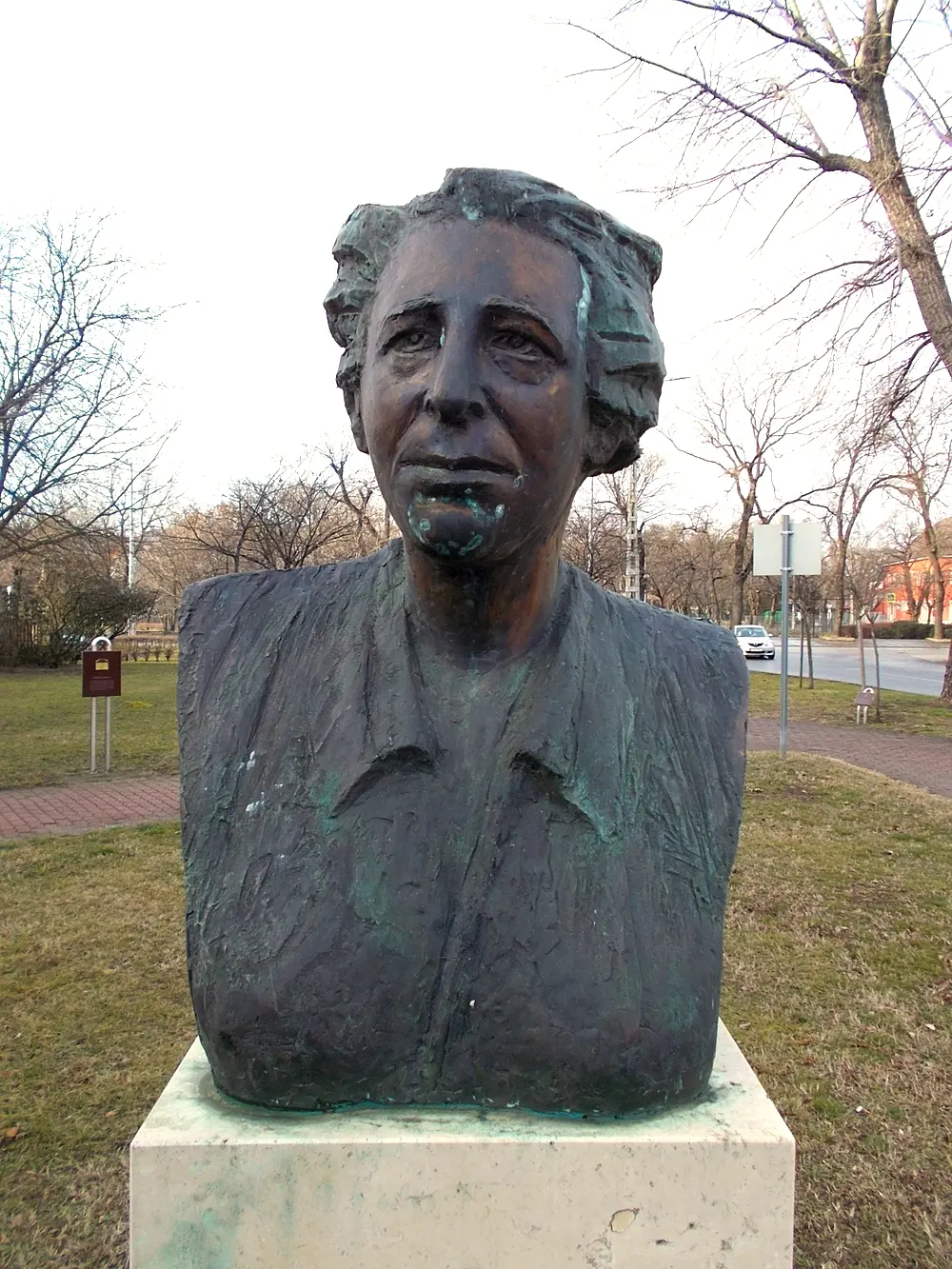
In April 1961 the trial of Adolf Eichmann began in Jerusalem: the former SS lieutenant colonel who in the Reich Security Main Office had organised the deportation of Europe's Jews to the extermination camps and whom the Israeli secret service had tracked down and abducted in Argentina a year earlier. Among the listeners sat a woman of 54 who had left her homeland in 1933 and had lived in New York since 1941: Hannah Arendt, philosopher, student of Heidegger and Jaspers, author of a work on the origins of totalitarian rule. The New Yorker had sent her as a reporter. What she published two years later in five articles and then as a book bore a subtitle that belongs among the most consequential formulations of the century: 'A Report on the Banality of Evil'.
To understand what Arendt meant one must know what she had expected. Ten years earlier she herself had written of radical evil, an evil with root and depth that burst the limits of human comprehension. In the glass box in Jerusalem now sat no demon but a middle-ranking official with a cold who spoke in clichés, invoked his oath, quoted Kant without having understood him, and stressed again and again that he had never hated anyone, he had only done his duty and would have liked to be promoted. According to Arendt that was precisely the finding: Eichmann was not stupid, but he was thoughtless, in a precise sense. He was incapable of imagining for one moment what he was doing from the standpoint of another. This inability to think made him unable to judge, and a person who does not judge can, without any evil motive, do the most evil thing there is, provided an order demands it of him. Evil, so her conclusion, has no depth. It is banal, not in the sense of being harmless, but in the sense that it spreads like a fungus over the surface wherever people stop thinking.
The reaction was a storm, and it had two centres. One was the concept itself. Critics countered that she trivialised the perpetrator, turned the murderer into a bureaucrat and thereby robbed the victims of the dignity of having been killed by an enemy who at least hated them. The other was a few pages on the Jewish councils, the representatives of the Jewish communities who under pressure from the occupiers had taken part in administering the ghettos; Arendt called their role the darkest chapter of the whole story. Gershom Scholem, the Jerusalem historian of religion and her friend of many years, wrote to her in June 1963 that she lacked love for the Jewish people; her tone was heartless and mocking. Arendt replied that she had never in her life loved a people or a collective, only persons, and that she considered such love suspect. The exchange ended the friendship. In Israel the book went untranslated for decades; in Germany, where it appeared in 1964, it was read eagerly, for reasons not all of which were honourable: if evil was banal, then perhaps it was also forgivable.
Arendt never intended this misuse and expressly rejected it. That Eichmann was thoughtless did not in her eyes make him less guilty but was the real ground of his guilt: thinking is a duty, and whoever refuses it answers for what follows from the refusal. She supported the death sentence, and at the end of the book she herself formulated the reasoning she would have wished from the court: because Eichmann had supported a policy that did not want to share the earth with the Jewish people and other peoples, nobody from humanity could be expected to share the earth with him.
And what remains of the thesis? Recent research has destroyed part of its foundation. In 2011 the philosopher Bettina Stangneth analysed tapes and notes Eichmann had confided in the fifties in Argentina to a circle of old National Socialists. There speaks no thoughtless official but a convinced, garrulous, proud antisemite who affirms his deeds and regrets not having been more thorough. The man in Jerusalem had played a role, and Arendt, like the court, had fallen for it. The finding argues against her reading of this one man. It does not argue against her concept. For the question of how ordinary people in a functioning apparatus do monstrous things without feeling themselves to be perpetrators has not grown smaller since 1963, and for these people, who are more numerous than the Eichmanns, nobody has found a better description. One can reproach Arendt with having seen the right thing in the wrong example. There are worse errors.