A1.2 · 1 of 36
Akkusativ (Artikel)
Lesson · 4 rules · about 5 min
German shows who does what with the article, and in the accusative only der-words change: der Hund becomes den Hund.
- 1Only masculine moves: der → den, ein → einen
- 2wen oder was? — ask the verb
- 3The verbs that always take it
- 4-n on the blue words
Why this matters
German marks the job a noun does in the sentence by changing its article — that is what a 'case' is. The nominative is the subject (the one doing); the accusative is the direct object (the one it is done to): Der Mann sieht den Hund — the man sees the dog. This is the first case beyond the nominative, and the friendliest: only the masculine changes. der becomes den, ein becomes einen; feminine, neuter and plural look exactly as they did. Every transitive verb — haben, sehen, kaufen, essen, brauchen, möchten — takes an accusative object, so you will use this in nearly every sentence from now on. Ask 'wen oder was?' (whom or what?) after the verb and the answer is the accusative.
Rule · 1 of 4
Only masculine moves: der → den, ein → einen
Feminine (die / eine), neuter (das / ein) and plural (die) are identical in nominative and accusative. All the work is in the masculine column.
| masc. | fem. | neut. | plural | |
|---|---|---|---|---|
| Nom | der / ein | die / eine | das / ein | die / – |
| Akk | den / einen | die / eine | das / ein | die / – |
- Ich sehe den Mann. Ich habe einen Hund. I see the man. I have a dog.
- Ich sehe die Frau, das Kind und die Kinder. I see the woman, the child and the children. (no change)
English shows the object by word order alone. German shows it on the article, and later on adjectives and pronouns too. This is the start of the case system.
Quick check
Ich sehe Lehrerin. (die Lehrerin)
Rule · 2 of 4
wen oder was? — ask the verb
The accusative answers 'whom or what?' after the verb: Ich kaufe (was?) einen Apfel. Ich kenne (wen?) den Lehrer. If the question is 'wer?' (who is doing it), that is the nominative.
- Wer kauft? – Der Mann. Was kauft er? – Einen Apfel. Who is buying? – The man (nom.). What is he buying? – An apple (acc.).
- Wen siehst du? – Den Lehrer. Whom do you see? – The teacher.
Quick check
trinkt den Kaffee? – Der Mann.
Rule · 3 of 4
The verbs that always take it
haben, brauchen, kaufen, sehen, essen, trinken, lesen, suchen, finden, möchten, kennen, es gibt — the object after them is accusative. Note es gibt: Es gibt einen Park.
- Ich brauche einen Stift. Hast du einen Moment? I need a pen. Do you have a moment?
- Es gibt hier einen Supermarkt. There is a supermarket here.
Quick check
Es gibt hier Bahnhof. (der Bahnhof)
Memory trick · 4 of 4
-n on the blue words
The masculine is the blue column in every table here. In the accusative the blue words grow an -n: den, einen, keinen, meinen. Red, green and plural stay put.
- der Hund → den Hund · ein Hund → einen Hund blue grows an n
- kein Stift → keinen Stift · mein Bruder → meinen Bruder no pen · my brother — the masculine object adds -en
Quick check
Ich besuche Bruder. (my, der Bruder)
In context
Hear it in a real exchange
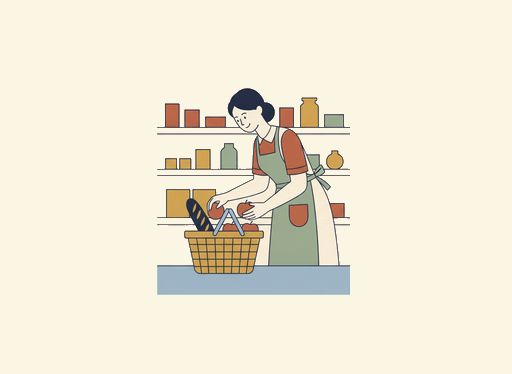
Ich gehe einkaufen. Ich brauche einen Apfel, eine Banane und ein Brot. Im Supermarkt sehe ich den Nachbarn. Er kauft einen Kaffee und die Zeitung. Dann sehe ich das Auto von meinem Chef – und meinen Chef!
I'm going shopping. I need an apple, a banana and a loaf. In the supermarket I see the neighbour. He buys a coffee and the paper. Then I see my boss's car – and my boss!
Spot the mistake
Which one is right?
Spot the mistake
Which one is right?
Spot the mistake
Which one is right?
Cheat sheet
What to take with you
- Only masculine moves: der → den, ein → einen
- wen oder was? — ask the verb
- The verbs that always take it
- -n on the blue words
How to remember it
- Only the masculine changes, and it just adds -(e)n: den, einen, keinen, meinen.
- wer? = nominative, wen? = accusative — ask the question, get the case.
The full table · 15 rows
| Nomen | bestimmt (den/die/das) | unbestimmt (einen/eine/ein) |
|---|---|---|
| derMann | den | einen |
| derTisch | den | einen |
| derHund | den | einen |
| derApfel | den | einen |
| derBall | den | einen |
| dieFrau | die | eine |
| dieLampe | die | eine |
| dieKatze | die | eine |
| dieTasche | die | eine |
| dieBanane | die | eine |
| dasKind | das | ein |
| dasAuto | das | ein |
| dasBuch | das | ein |
| dasHaus | das | ein |
| dasBrot | das | ein |
bestimmt (den/die/das)
Ich sehe Mann.
I see the man.
Report a problem
Exercise
Akkusativ (Artikel) · A1.2
No single question is on screen — the report is about the whole exercise.
Reports go to the forum, where anyone can read them and the answer is kept for the next learner. To send one — and to be told when it is answered — sign in first. It takes one email, and no password.
Signing in lets us reply to your report, and shows you the answer the next time you are here. We email you a one-time link: no password, and nothing is shared with anyone.